Interview with Anand Ragbir and David Knipe
Around the world, the energy sector is undergoing a profound transformation. Nations are seeking solutions that maintain reliability while reducing emissions and controlling costs– an equation especially challenging for small, fuel‑importing island states. As discussions shift from long‑term ambitions to practical, deployable options, methanol is emerging with renewed relevance.
For Proman, one of the world’s largest methanol producers and a cornerstone of Trinidad and Tobago’s energy economy, methanol represents far more than a globally traded commodity. It offers an opportunity to strengthen Caribbean energy resilience, create new economic pathways, and position the region at the forefront of scalable, cleaner power generation.
Methanol: A Ready Fuel for Today’s Energy Needs
Long used across industrial, transportation, and shipping sectors, methanol is now gaining traction for electricity generation. It is transported as a liquid at ambient temperatures, biodegradable in water, and can be integrated into existing systems with minimal conversion costs. This combination of safety, simplicity, and adaptability enables power solutions to be deployed quickly and at scale– an advantage for Caribbean markets coping with aging assets and high fuel import bills.
Methanol offers a practical pathway toward stronger energy security and environmental progress without sacrificing reliability.
Proman: A Global Leader with Deep Local Roots
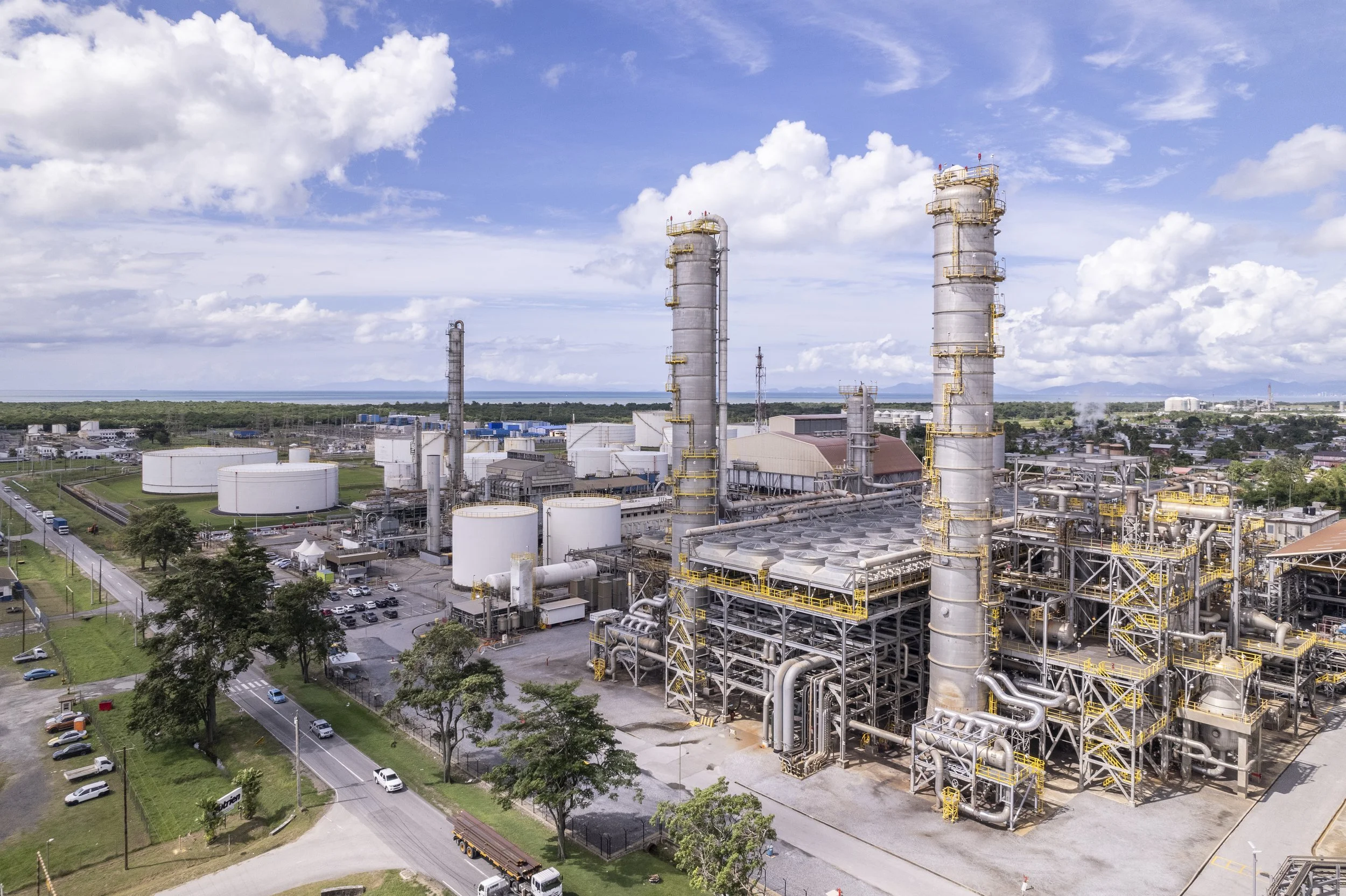
Proman is the world’s second‑largest methanol producer and has been operating in Trinidad and Tobago for more than 35 years. As this country’s largest petrochemical producer, Proman operates 14 of the 17 plants at the Point Lisas Industrial Estate and is the estate’s largest employer.
Locally, Proman’s contribution is unmatched, and its continuous investments in technology and operational excellence have positioned Trinidad and Tobago as a global centre of methanol expertise and stable supply.
For Proman’s Managing Director, Anand Ragbir, this legacy translates into opportunity.
“We’ve always taken a long-term view in Trinidad and Tobago,” Ragbir says. “Our investments ensure T&T’s methanol remains competitive globally. Extending methanol into power generation is a natural progression that strengthens energy security, creates opportunities, and aligns our country with where global markets are heading.”
Across the Caribbean, the potential impact is significant. Many island nations depend heavily on imported diesel and heavy fuel oil that are carbon-intensive and volatile in price. Substituting a portion of these imports with Caribbean‑produced methanol could reduce emissions, lower fuel costs, improve reliability, and retain more economic value within the region.
For Ragbir, methanol’s strength lies in its practicality.
“Methanol brings balance. It lowers emissions while keeping electricity reliable and affordable. It complements, rather than competes with, renewables. And for our neighbours, it’s a regionally produced solution backed by decades of operating excellence in Trinidad and Tobago. We are ready to play a defining role in shaping the region’s next energy chapter.”
Bringing methanol power to the Caribbean
Proman launched Power32 to deliver low-emission, methanol power solutions at scale. Headquartered in the UK, the team has been working with OEMs (Original Equipment Manufacturers), to build methanol powered solutions that range from 250 kW generator sets to industrial-scale power plants of over 250 MW.
We spoke with Managing Director, David Knipe, ahead of the Trinidad and Tobago Energy Conference.
Why methanol for power generation?
As a liquid at room temperature, methanol is a cleaner burning, cost-competitive, and readily available alternative fuel that can be easily stored and used with existing engine and turbine technologies. It burns with no soot (particulate matter), almost no SOx (sulphur oxides), and vastly reduced NOx (nitrogen oxides) and reduced CO2 (carbon dioxide). Crucially, it offers a net zero pathway as lower carbon and green methanol are increasingly mixed with methanol produced from natural gas.
Why is methanol power relevant to Trinidad and Tobago and the Caribbean?
Trinidad is a leading global methanol producer on the doorstep of several island nations that are reliant on expensive diesel imports. Imagine if we could switch those imports with Caribbean produced methanol – with shorter, cheaper shipping routes than alternative fuels and CARICOM trade protocols exempting energy exports from import duties where they apply. This would have an immediate positive impact on local economies as the reduction in annual fuel expenses is redirected to investments in initiatives to support growth. Equally, it offers a new, local market for Trinidad produced methanol.
What is your ambition for Power32?
Industrial companies, datacenters, island communities and utilities in developing nations are all struggling to get access to power. In the best cases they are subject to poor choices – power at high financial and environmental cost - and at worst, no access to power at all. While renewables and grid expansion will increase over time, it’s not happening fast enough. Power32’s solutions can bring low-emission, competitively priced power now, where it is needed. But our ambition extends beyond that, to reimagining how power generation and associated fuel costs can be optimised, particularly within the Caribbean electricity market.