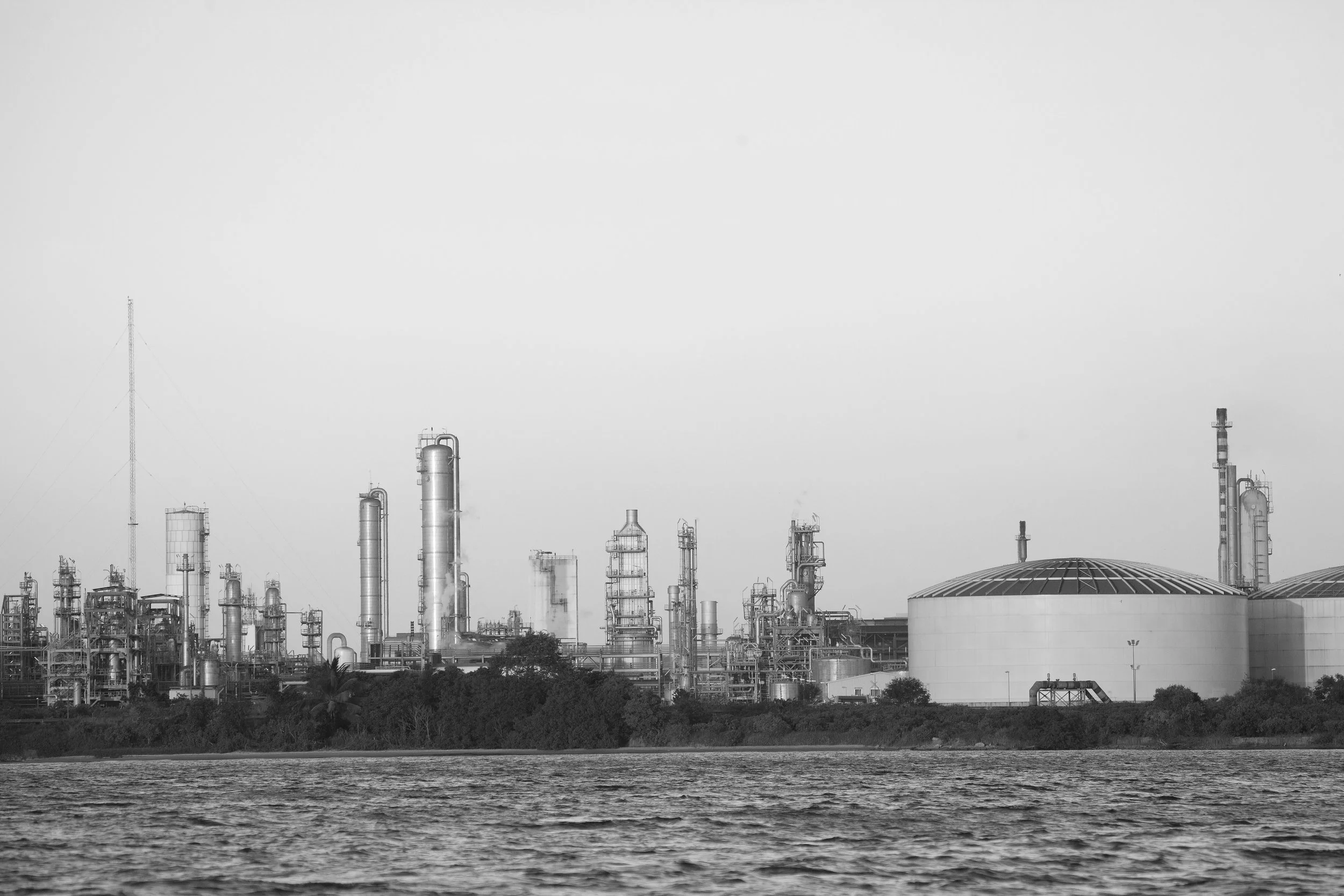
As local oil, gas and petrochemical facilities reach and exceed their design life, there may be a strong business case for their continued operation. However, to justify this facility owners must undertake a Life Extension (LE) assessment to demonstrate that, despite degradation that may have occurred over time, these facilities can continue to function within existing HSE regulations at acceptable levels of risk and reliability. The assessment typically takes the form of a risk evaluation, and this article outlines three key factors, Organizational Readiness, Material Degradation and Obsolescence¹, that should be considered for aged offshore oil and gas facilities. These factors can also be applied to onshore and other petrochemical facilities with comparable high-risk profiles. Additionally, the UK’s Safety Case regulatory framework² is referenced, given its use in the local upstream and downstream sectors and the integration of LE as part of the framework.
The Safety Case Framework
The safety case framework is a methodical approach to major accident risk management, requiring owners and operators of high-hazard installations to demonstrate that all major health, safety and environmental risks associated with their operations have been identified and that adequate controls are in place to manage these risks to As Low As Reasonably Practicable (ALARP)². The safety case is a “living” document and is subject to a “thorough review” every five years, or earlier if significant changes occur that impact the facility’s risk profile—for example, extending its operating life².
The process begins by reviewing typical major accidents and events and assessing them against a defined risk matrix to identify applicable Major Accident Hazards (MAHs). Initiating events i.e., threats are identified and preventive and mitigating controls (engineered and administrative) are then developed. These are designed to reduce the probability / severity of a MAH and bring the risk of the MAH to ALARP. Finally, Performance Standards (PS) are developed to define the function, performance criteria reliability and availability targets for the controls, along with auditing requirements to verify the controls are being maintained as per the PS.
Production / Economic Impacts
When extending the life of a facility, it must not only operate safely but also at a level of reliability that allows it to generate adequate financial returns. As the safety case is traditionally designed to minimize health, safety and environmental risks, the risk matrix and analysis must be expanded to include production and economic risks. Using this “expanded” risk matrix, facility equipment can be assessed to determine whether the threat posed by its failure would significantly impact production i.e., whether it is “Production Critical” and additional preventive and mitigating controls identified to reduce the risk of lost production to ALARP.
Any facility that employs the safety case framework should begin the LE assessment by modifying the risk matrix to incorporate production and economic consequences. Then existing and new threats that can cause a MAH or significant production loss should be reviewed / identified and existing and new preventive and mitigating controls reviewed / developed through the lens of organizational readiness, material degradation and obsolescence, updating them as required to reduce all risks to ALARP.
Organizational Readiness
Organizational readiness encompasses two key areas that inform administrative controls aimed at reducing the likelihood of a MAH or significant production loss.
Leadership. LE must be managed from the original end of design life through the life extension period until cessation of production. This includes building out the organizational structure required to manage LE, developing, implementing and testing new controls, managing equipment obsolescence and participation in the capital budgeting process to secure funding to support the overall LE process. Given its importance to the business, LE requires leadership at the highest organizational levels. Roles and responsibilities should therefore be integrated into existing leadership structures or assigned to dedicated LE manager roles.
Resourcing. LE management requires adequate and competent resources to support and execute LE activities, including Technical Authorities, corrosion engineers, planners and inspection technicians. This requires plans to assess and maintain personnel competency, succession planning, and systems to capture and retain institutional knowledge in the event of attrition or retirement. Because many LE activities require specialist third-party providers, contracting strategies should include competency assessment and verification requirements, service provider performance KPIs, and submission of inspection data in formats compatible with the facility’s maintenance management systems.
Material Degradation
Material degradation results from a facility’s long-term exposure to operational and environmental conditions, reducing the integrity, reliability or performance of components and equipment. It is a critical driver in a LE assessment, as it affects both Safety Critical Equipment (SCE) e.g., pressure safety valves, and production critical equipment and is a key consideration in the safety case review.
Degradation occurs through several ageing mechanisms, including corrosion, erosion, creep, embrittlement, wear and material property changes under cyclic stress. In the context of LE, these mechanisms may become more pronounced due to changes in operating or environmental conditions over the facility’s lifespan for example, as reservoirs deplete, increases in water cut and decreases in oil volumes resulting in increased corrosion in topside equipment and oil export pumps operating in full recycle, more frequent storm events due to global warming resulting in increased fatigue on jacket structures or more frequent natural gas curtailments resulting in increased start-up / shutdown cycles leading to increased fatigue on process equipment.
Numerous industry standards have been developed to consider the effects of aging and determine whether equipment (SCE or production critical) can continue to operate according to its respective performance criteria by systematically assessing its integrity using operational histories, inspection data, various analytical methods, modelling and trending analysis. The outcome determines whether the equipment is fit for continued service or requires repair, refurbishment or replacement, and the timing when these activities should take place. Well-known standards include API 579-1/ASME FFS-1 (Fitness-For-Service for stationary mechanical equipment) and API RP 2SIM (Structural Integrity Management of Fixed Offshore Structures).
Extending the facility life will require changes to various SCE PSs and additional equipment inspections / evaluations and maintenance routines. These should be integrated into the facility’s Asset Integrity Management System (AIMS)³. A similar outcome is expected for production critical equipment and in both instances funding to support the assessment, repair, refurbishment and replacement of equipment allocated across various planning horizons i.e. 1 to 5 years, 5 to 10 years, via the capital budgeting process.
Obsolescence
Obsolescence arises when components, systems or technologies become unsupported, outdated or incompatible with current regulatory, safety or performance requirements. Unlike degradation, which results from physical deterioration, obsolescence can occur even when equipment remains intact but can no longer be maintained or relied upon.
Obsolescence commonly affects hardware and software in instrumentation, control, automation and electrical systems that would typically constitute both SCE and production critical equipment such as Emergency Shutdown (ESD) systems, turbine control systems and electrical power protection systems. Continued operation of such equipment beyond its design life may be impacted by the availability of spare parts, in-house and third-party technical support, vulnerability to cybersecurity threats, or incompatibility with modern digital tools (e.g., condition-based monitoring and optimization systems).
To manage the risks associated with obsolescence, administrative controls are needed to oversee the equipment lifecycle, including technology reviews, vendor engagement strategies, hardware/software compatibility assessments, refurbishment and replacement plans. As with the other factors, these activities and any forecasted equipment changeouts must be incorporated into the facility’s capital budgeting process.
As oil, gas and petrochemical facilities continue operating beyond their original design life, LE assessment becomes a critical activity for ensuring safe, reliable and economically viable operations. Where a safety case is used to manage MAH, the LE process begins with a review and update of the safety case to incorporate production and economic risks. The assessment must then evaluate new / additional threats, the adequacy of engineered and administrative controls through the lens of organizational readiness, material degradation and equipment obsolescence and update them accordingly so that overall facility risk is reduced to ALARP. Ultimately, successful life extension requires dedicated leadership, adequate resourcing, systematic SCE degradation assessment and robust equipment lifecycle planning, all of which must be supported through long-term capital allocation to ensure the facility continues to operate safely throughout its extended life.