
"Workover" is a term used in the oil and gas industry to describe the maintenance and repair of existing wells. These interventions are undertaken to restore production in declining wells or to restart those that have ceased producing entirely. As such, they are a vital component of the oil and gas well lifecycle.
In Trinidad and Tobago (T&T), the vast majority of annual workover activity takes place onshore. In any given year, approximately 75% or more of these projects are conducted on onshore crude oil wells, many of which are operated by Heritage Petroleum and Lease-out/Farm-out operators.
This distinction is significant because onshore workovers generate substantial local content activity. They create employment for laborers and contractors, primarily in south Trinidad, and drive demand for ancillary support services such as transport, catering, brush cutting, and other logistical needs critical to project execution.
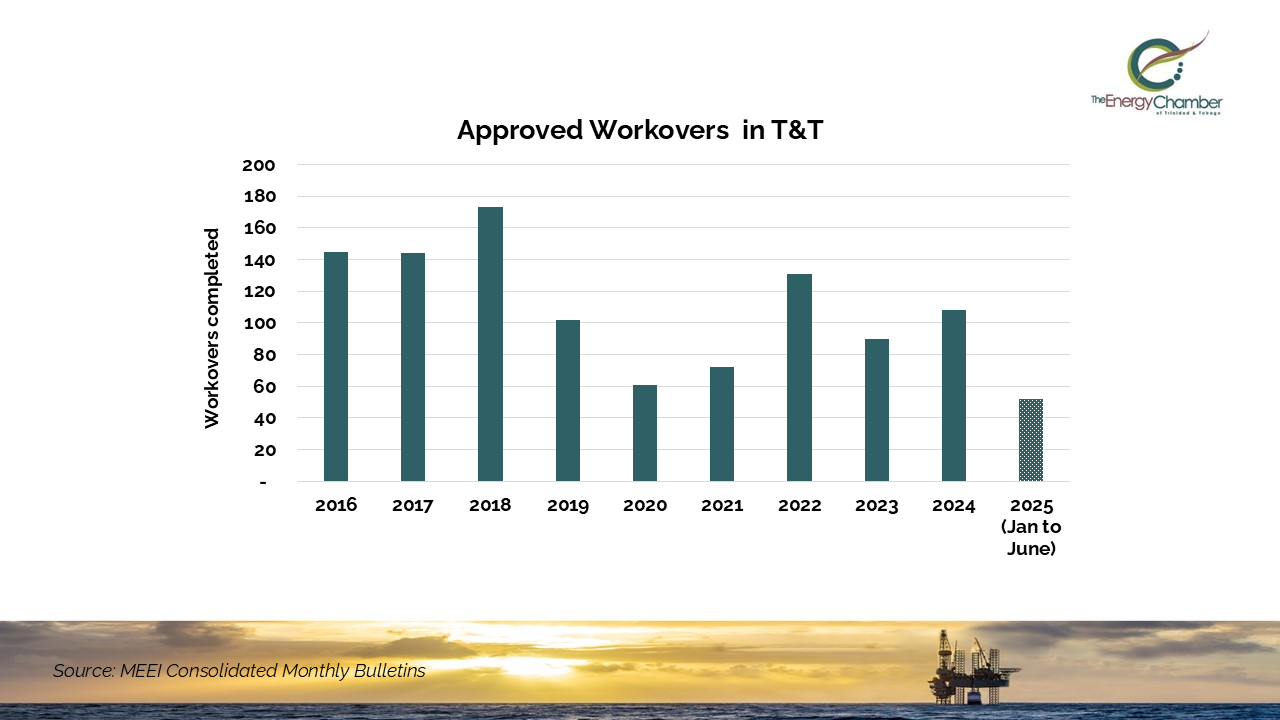
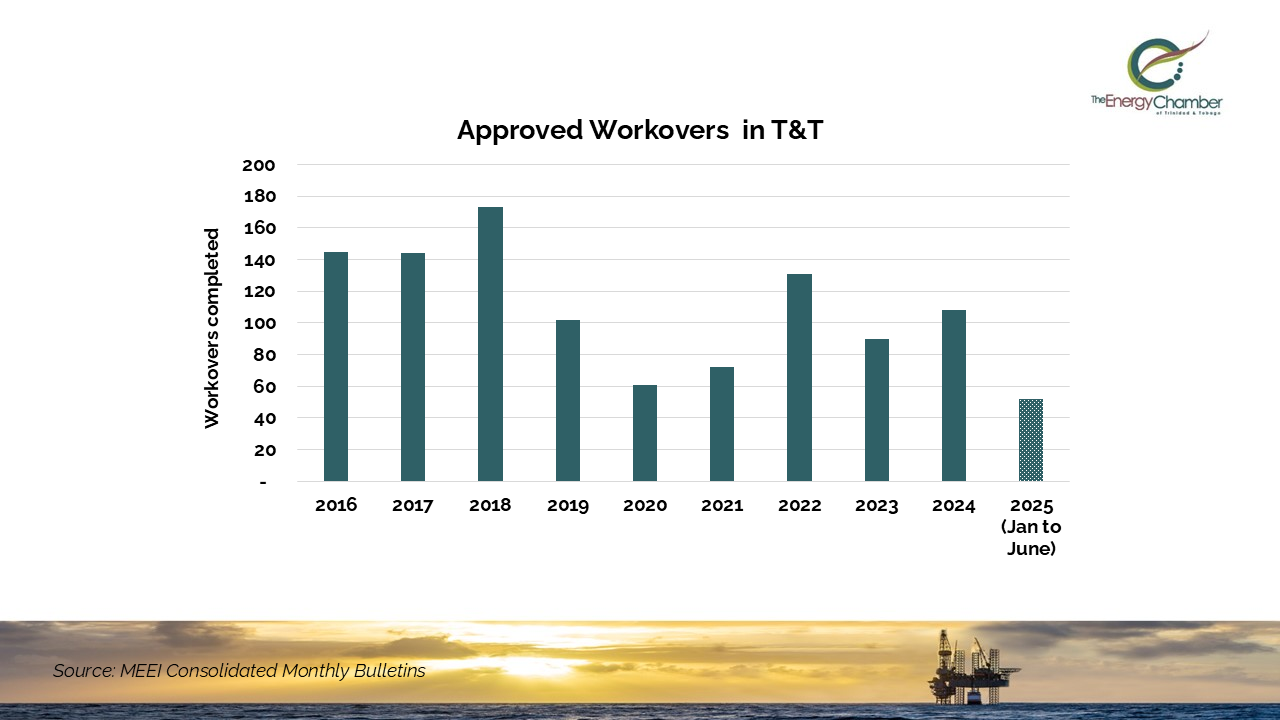
Over time, however, the number of workovers being executed has been declining. Despite a surge in activity in 2018, there was a noticeable drop in 2019, followed by further declines in 2020 due to the pandemic. Since then, while there has been some recovery, activity has not returned to pre-2018 levels. Common workover activities include pump change-outs, tubing replacement, completion repairs, well cleaning, and stimulation.
As noted, workovers are critical to well infrastructure as they not only improve operational safety but also boost production. On many occasions, we have highlighted the current state of production in T&T, which has been falling overtime. While workovers alone cannot reverse the total decline, they help stabilize production from the country’s aging assets.
However, several issues hinder these operations. One major challenge affecting small oil-producing companies is the Supplemental Petroleum Tax (SPT). This tax impacts companies’ free cash flow, thereby restricting their ability to fund workovers or pursue further exploration and development. Another significant issue for the small oil sector is the delay in VAT refunds. Both issues severely affect a company’s ability to execute projects and maintain production portfolios.
At the T&T Energy Conference in 2026, there will be a session titled “Collaboration for Efficiency in the Small Oil Company Sector.” In this session, the Energy Chamber aims to explore the relationships between small Lease-out/Farm-out operators and the contractors engaged in workovers. While the majority of national crude oil production still comes from offshore, the onshore sector must not be overlooked. It remains an important avenue for creating economic activity, jobs, and competitive energy service companies. Developing these companies and their workforce is a crucial step toward encouraging the export of energy services from T&T and increasing foreign exchange earnings from this subsector.