The Energy Chamber of Trinidad & Tobago welcomes the short-term policy measures that have been enacted by the Government and the Central Bank and commends the response by the banking sector to implement new policies and procedures that will assist both individuals and companies in these extremely difficult circumstances. We have seen a vital part of the private sector, both local and foreign, stepping forward to help the nation through this difficult time. Access to liquidity will be essential for most companies during this crisis period, when their revenue is likely to be very significantly reduced. If companies are to be able to meet the common objective of preserving jobs, many will need liquidity support just to meet their payroll costs.
The 2019 World Economic Forum (WEF) Global Competitive Index (GCI) ranking for Trinidad & Tobago (T&T) dropped by one (1) place at 79/141 countries when compared to 2018. This places T&T in the bottom 50th percentile. One of the reasons for low competitiveness lies in the low innovation capacity and dynamism of our businesses. T&T’s ranking of 87 for Business Dynamism (BD) is relatively low for a high income (GNI per capita) country (i.e. well above the trend line of income vs GCI rank). From the chart below one can see countries with similar income to T&T e.g. Panama and Latvia with higher BD rankings than T&T. More interestingly are lower income countries that have much better BD rankings e.g. Jamaica (33rd) and Rwanda (46th, whose Government launched an innovation fund in 2018). In this context, the narrative of Business Transformation (BT) arises i.e. the evolution or revolution of the business model.
The world is experiencing a decoupling of energy production and economic growth. Even if demand for fossil fuels persists, the Fourth Industrial Revolution (4IR) will transform the oil and gas (O&G) value chain. Many economies are still tightly coupled with O&G complicating predictions of what the future workforce may look like.
Ten million people in the Caribbean are without access to electricity due to a lack of financial resources for needed advancements. The Caribbean transportation and power sectors rely on dirty and expensive fuels. Natural gas vented into the air during oil production in Trinidad can be used to generate resources for transformative low emission and renewable energy projects in the Caribbean.
The Joint Chambers of Commerce, in collaboration with the Confederation of Regional Business Chambers, recognize that this is an unsettling time for everyone. It also presents a unique and challenging business environment, and this is likely to be exacerbated by the necessary restrictions on the movement of people.
Shell Trinidad and Tobago announced that the company has taken Final Investment Decision (FID) for the development of Block 22 and NCMA-4 in the North Coast Marine Area (NCMA).
The Joint Chambers fully support the sentiments expressed at this morning’s press conference by the Minister of Labour, Small and Micro Enterprises. We commend the Minister and the Government for taking proactive steps to address this unprecedented threat to the people of Trinidad & Tobago.
Apache announced that the company will be taking multiple actions being taken in response to the current oil price environment. The changes include adjustments to its 2020 capital investment plan which drops to a range of $1.0 billion to $1.2 billion from a previous range of $1.6 billion to $1.9 billion.
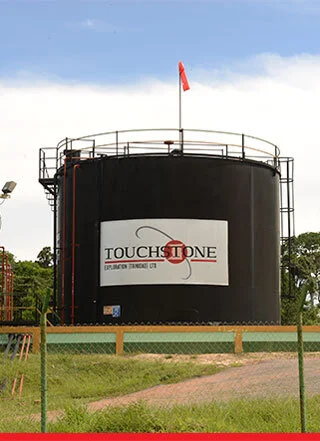
Touchstone Exploration indicated that after the second stage of testing at the Cascadura 1ST1 well, the tests delivered a combined average of 10,600 boe/d.
The Network of Caribbean Chambers of Commerce (CARICHAM) notes with significant concern the current situation in Guyana.
MPU offers Energy Efficiency Training MPU offers Energy Efficiency Training
Expression of Interest: Provision of Marketing Services for the Cooperative Republic of Guyana’s Oil Entitlement from the Liza Destiny FPSO Vessel
Trinidad and Tobago is now one step closer to having significant renewable energy on the grid. At the post cabinet briefing, Prime Minister, Dr Keith Rowley announced that the cabinet took a decision in T&T to proceed with our renewable energy initiative”
BP set a new ambition to become a net zero company by 2050 or sooner, and to help the world get to net zero.
The Ministry of Energy and Energy Industries has released the Ryder Scott report on the Natural Gas Reserve Audit 2018.
In the 2019-2020 budget presentation, Minister Imbert announced some changes to the fiscal environment under which the oil and gas companies operate, but more so oil. Many oil producers have lobbied for the government to adjust the Supplemental Petroleum Tax (SPT) to make it less burdensome. When the Minister announced the changes, at first glance it seemed like a positive change, however the Minister also announced changes to the capital allowance schedule for energy companies involved in exploration and development. The result will have a negative impact for companies in the oil sector. Paul Baay, President and CEO of Touchstone Exploration said in an interview, “We’re definitely in a worse position than we were before the budget.”
Even though Trinidad and Tobago’s energy sector is dominated by natural gas, oil production continues to play an important role in the economy. For many years the state-owned oil company, Petrotrin, accounted for the majority of oil produced in Trinidad.
EOI for Fuel and Services
The Caribbean Single Market and Economy (CSME) is suffering from an implementation deficit. Many of the measures that have been agreed at a CARICOM Heads of Government level have not been fully implemented by the respective national governments. The Energy Chamber of Trinidad & Tobago urges the political leadership of the region to move aggressively towards the full implementation of the CSME.