A new offshore seismic campaign is underway in Brazil’s Pelotas Basin, with TGS and SLB starting a large-scale 3D survey aimed at improving understanding of one of the country’s least explored offshore regions.
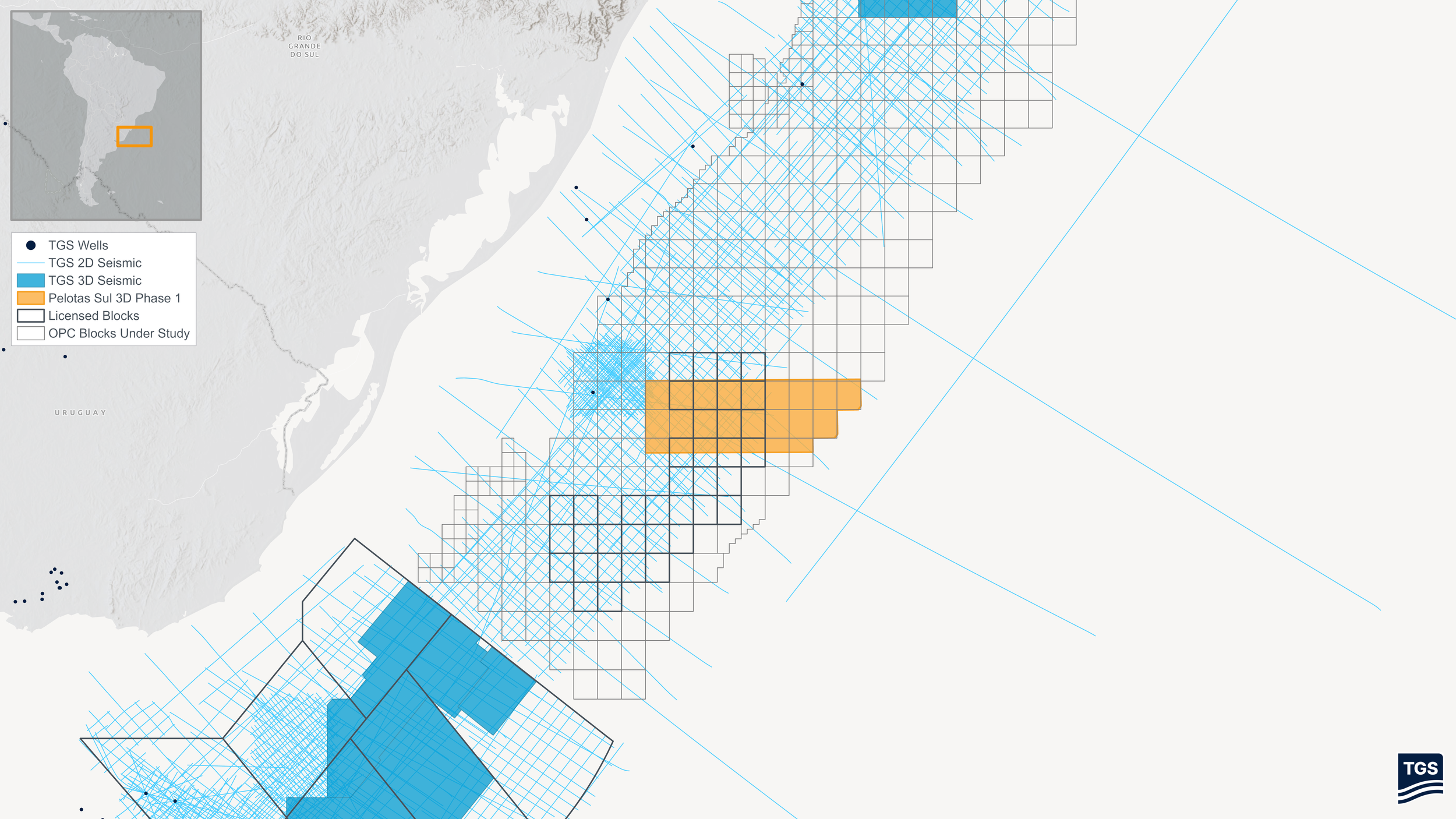
Known as the Pelotas Sul Phase 1 survey, the programme will cover around 13,500 square kilometres in the southern part of the basin. Data acquisition is expected to continue through to the third quarter of 2026, with the seismic vessel Ramform Tethys having begun operations after mobilising in December 2025.
The survey will add a substantial amount of new seismic data to the area, helping exploration companies better assess the basin’s geological potential. The coverage includes both licensed acreage and open blocks, giving companies the opportunity to review existing holdings while also examining areas that could be offered in future licensing rounds.
The Pelotas Basin has attracted growing attention over the past few years, largely because of the string of significant discoveries made offshore Namibia and South Africa. Many geologists see geological parallels between these regions and southern Brazil, as they were once part of the same landmass before Gondwana split apart. As exploration success in Namibia’s Orange Basin has continued to build, interest has naturally spread to similar plays along Brazil’s Atlantic margin.
Despite Brazil’s long-established offshore sector, the Pelotas Basin remains relatively lightly explored compared with producing areas such as the Santos and Campos basins. Existing studies suggest the basin may contain several promising play types, including deepwater channel systems, turbidite reservoirs and a variety of structural traps that have not yet been thoroughly tested.
This latest programme builds on TGS’ earlier Pelotas Norte survey and is part of a wider effort to develop a more complete seismic database across the basin. The company has also indicated that additional acquisition phases may follow, potentially extending coverage even further.