
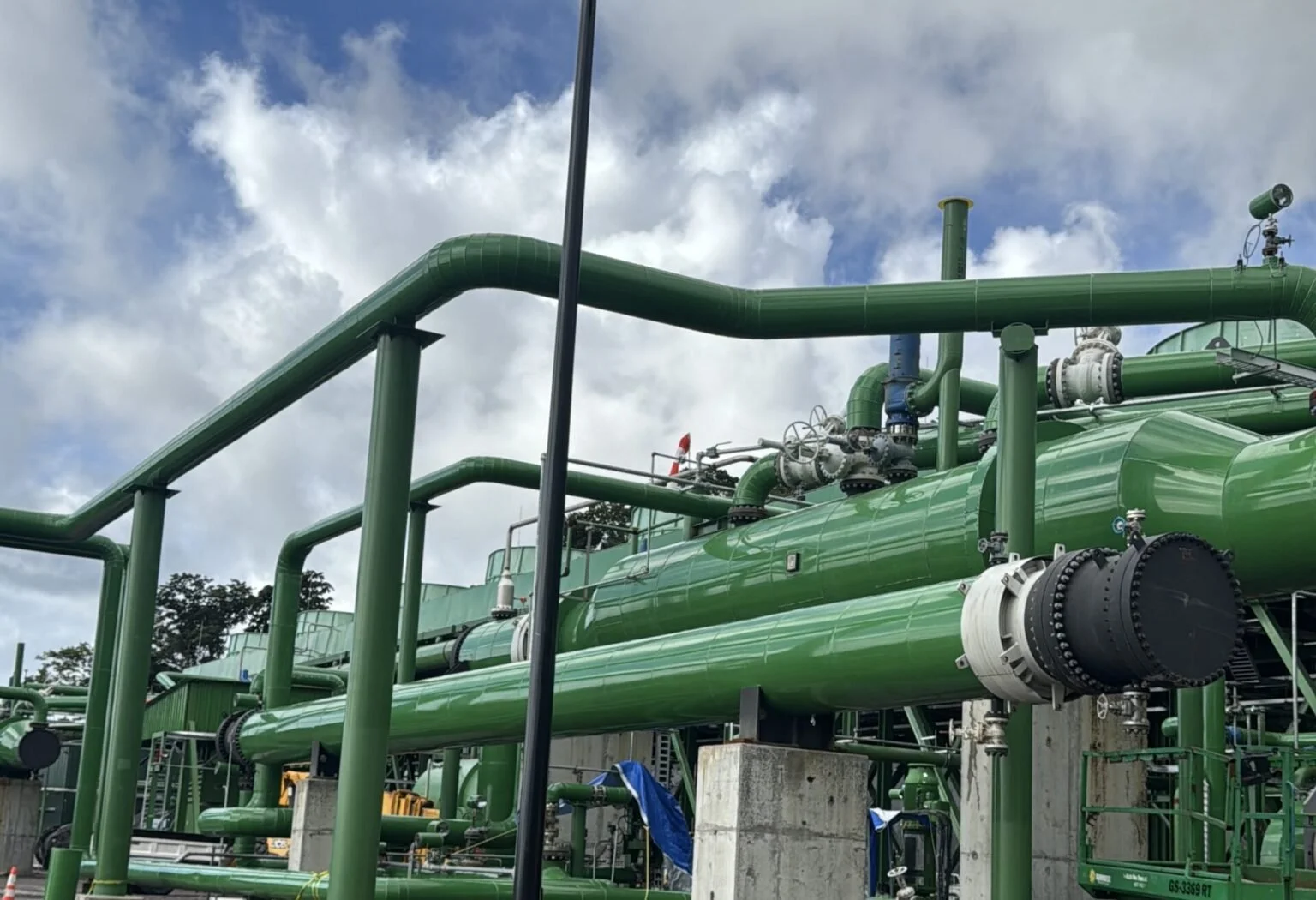
Dominica’s geothermal power project has entered a new stage, with electricity now being supplied to the national transmission system as final commissioning work continues at the 10-megawatt plant in Laudat. According to local reports and project updates, the facility began feeding power into the grid at the end of March, marking one of the clearest signs yet that the project is moving from construction into live operation.
The development is significant for Dominica because the plant is expected to reshape the country’s power mix once fully operational. The Caribbean Development Bank has said the facility should supply more than 60% of the island’s electricity needs and reduce dependence on imported diesel, a longstanding source of cost and energy security pressure for many small island systems.
Dominica Electricity Services Ltd. (DOMLEC) said the project has reached an advanced stage of commissioning, with key sections of the new 33 kV transmission system already tested and energized. That includes equipment at Fond Colé and Laudat, as well as the underground transmission line linking the sites. The plant’s generators have also been started and loaded, allowing geothermal electricity to be supplied through the new transmission infrastructure while testing continues.
However, the commissioning process is still ongoing. DOMLEC has indicated that the generators may still be adjusted or temporarily shut down as testing continues, and local outages may still occur in the short term while engineers work toward more stable and sustained operation. ThinkGeoEnergy, citing DOMLEC, reported that the target was to move toward the plant’s full 10 MW capacity by early April, with commissioning activity continuing through the end of the month.
The project has been a long time in development. Official and industry sources describe it as the culmination of roughly 15 years of exploration, drilling, financing and infrastructure work. A major commercial step came in December 2023, when Ormat Technologies signed a 25-year power purchase agreement with DOMLEC for the development of the binary geothermal plant. Under that agreement, ownership of the plant is to be transferred to the Government of Dominica at the end of the term.
The broader enabling infrastructure has also required substantial public and multilateral support. In January 2024, the World Bank approved US$38.5 million to help Dominica develop and integrate cleaner, lower-cost power through a more robust transmission network. The Caribbean Development Bank later said the geothermal plant itself was backed by a US$34.8 million financing package arranged with support from the Green Climate Fund and Canada.
For the wider Caribbean, the commissioning milestone is worth watching. Geothermal projects in the region are often discussed in terms of long-term promise but can take years to move through drilling risk, financing and grid integration. Dominica’s progress does not remove those challenges, but it does offer a live example of a small island system moving closer to commercial geothermal generation at scale.
If the final phase proceeds as planned, the project could become one of the most important recent changes to Dominica’s electricity sector: lowering exposure to imported fuel, improving supply resilience and giving the region a closely watched test case for geothermal development beyond pilot-stage ambition.