Egypt and the European Union have announced a €690 million clean-energy grid investment aimed at strengthening Egypt’s electricity transmission system and supporting the integration of more renewable energy into the national grid.
The project, announced on June 15, is being advanced with support from the European Commission and the European Investment Bank (EIB), according to statements from the European Commission and EIB. The investment is equivalent to about US$800 million and is expected to help Egypt integrate up to 22 gigawatts of renewable energy capacity by 2030.
The programme will be led by the state-owned Egyptian Electricity Transmission Company. It focuses on expanding and upgrading the grid so that Egypt can absorb more wind and solar power while improving system reliability, according to project information released by the European Commission.
The funding supports Egypt’s broader push to expand renewable energy as part of its long-term energy transition strategy. Egypt has set a goal for renewables to account for 42 percent of electricity generation by 2030, with a longer-term target of more than 60 percent by 2040, according to Egypt’s Integrated Sustainable Energy Strategy and government energy plans.
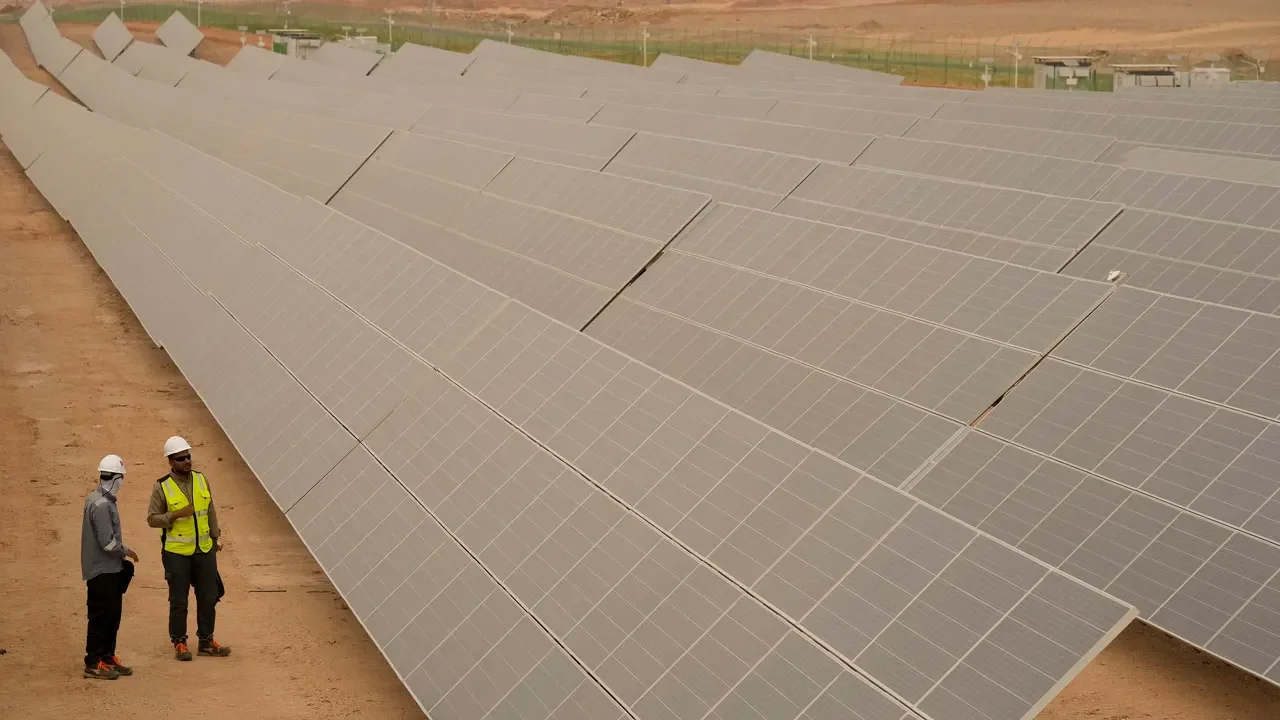
To support those objectives, the country is also targeting the addition of 2.5 gigawatts of renewable energy capacity to the grid in 2026. That buildout includes wind, solar and battery storage projects, as the government works to improve electricity supply and reduce pressure from fuel imports, according to announcements from Egypt’s Ministry of Electricity and Renewable Energy.
As renewable deployment accelerates, grid capacity is becoming a central issue in Egypt’s energy transition. Adding new solar and wind projects is only one part of the challenge. The country also needs transmission infrastructure that can move power from renewable resource areas to demand centres while maintaining stability across the national system, a challenge highlighted by the International Energy Agency (IEA) in its assessments of power-sector decarbonisation.
For the energy sector, the announcement underscores how grid infrastructure is increasingly moving to the centre of renewable energy planning. Without sufficient transmission capacity, new renewable projects risk delays or curtailment, a concern frequently cited by the IEA and the International Renewable Energy Agency (IRENA). Egypt’s latest investment is therefore not only a power-grid project, but a key part of the country’s wider energy transition strategy.
Beyond domestic energy goals, the EU-backed grid investment also strengthens Egypt’s position as a regional clean-energy hub. With its solar and wind resources, growing renewable pipeline and plans for electricity interconnections, Egypt is looking to play a larger role in North Africa, the Mediterranean and wider energy trade with Europe, according to European Commission and Egyptian government statements.
Taken together, the investment supports Egypt’s efforts to meet its renewable energy targets, address critical transmission constraints and expand its regional energy role. By linking grid development with long-term clean-energy ambitions, the project highlights the strategic importance of transmission infrastructure in enabling the next phase of Egypt’s energy transition.