ExxonMobil is moving ahead with plans for Guyana’s ninth offshore oil and gas development, with the Haimara discovery expected to anchor the next major project in the Stabroek Block.
According to reporting by Fabio Palmigiani of Upstream (www.upstreamonline.com), Exxon is preparing to submit an environmental application to the Government of Guyana later this month, as it continues to accelerate development across one of the world’s most active offshore petroleum basins.
ExxonMobil Guyana President Alistair Routledge said the proposed Haimara development is still going through technical and commercial review, but the company expects to begin the formal environmental process soon.
“We still have a lot of work to do, pull together technical analysis for field development, and go to the market to assess conditions. These things take some time,” Routledge said on the sidelines of the Offshore Technology Conference 2026 in Houston, Texas.

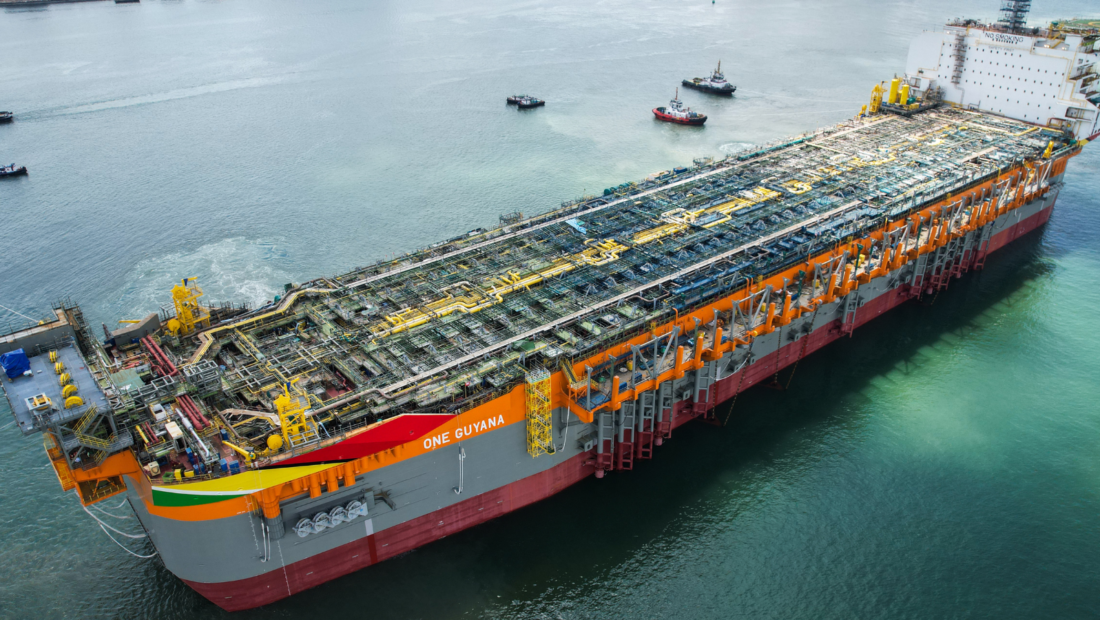
The project would mark another major step in Guyana’s rapid offshore expansion. ExxonMobil is already producing more than 900,000 barrels per day from four floating production, storage, and offloading vessels operating at the Liza, Payara, and Yellowtail fields.
Four more FPSOs have also been contracted for the Uaru, Whiptail, Hammerhead, and Longtail developments, placing Guyana on track for further production growth through the end of the decade.
The Haimara discovery, located further southeast in the Stabroek Block, was first made in 2019, when the Haimara-1 well encountered about 63 metres of gas condensate-bearing sandstone reservoirs. The discovery remained on standby for several years while ExxonMobil and its partners focused on advancing other oil developments across the block.
Since December 2023, ExxonMobil has drilled three additional appraisal wells at Haimara, strengthening the case for a future development.
Routledge said the company is targeting first production from Haimara in 2031 and has a team working on the project’s design and development plan.
“We are still working through the size of the FPSO, but we are going to try and leverage the opportunity to design one and build two,” he said.
He said ExxonMobil is examining whether it can replicate aspects of the Longtail FPSO design for Haimara.
“We have designed one FPSO specifically for Longtail, which is for gas and condensates, and we will see if we can replicate it at Haimara,” Routledge said.
Longtail, which ExxonMobil recently sanctioned, is expected to host Guyana’s largest FPSO to date. The vessel will have the capacity to process 250,000 barrels of oil per day and 1.2 billion cubic feet of gas per day. It will also be Guyana’s first gas-driven offshore project with a high condensate-to-gas ratio.
The Haimara reservoir is expected to have similarities to Longtail, but Routledge said Haimara likely contains more gas and retrograde gas resources. Retrograde gas refers to a natural gas mixture that forms liquid hydrocarbons in a reservoir as pressure falls below the dewpoint.
The potential use of a Longtail-style FPSO at Haimara points to the growing importance of gas and condensates in Guyana’s offshore development strategy. Earlier Stabroek Block projects were largely oil-focused, while Longtail and Haimara suggest a new phase in which ExxonMobil is preparing to develop more complex, gas-rich reservoirs.
The Longtail FPSO will have a different design from earlier Guyana floaters, with greater gas compression capacity and no water injection. If ExxonMobil follows a similar approach for Haimara, the ninth project could become another major gas-focused development in Guyana’s offshore portfolio.
The environmental application will provide an early indication of the project’s proposed scope, including the planned FPSO capacity, production profile, and supporting offshore infrastructure.
Guyana has estimated natural gas reserves of about 17 trillion cubic feet, and the advancement of Haimara could help define how the country develops its gas resources alongside its fast-growing oil production.
For Guyana, the ninth project would extend the Stabroek Block development pipeline into the next decade and reinforce the country’s position as one of the fastest-growing energy producers globally. For the wider region, the project also signals continued investment momentum offshore Guyana, with new opportunities expected in engineering, logistics, fabrication, maintenance, and other support services as the industry expands.