
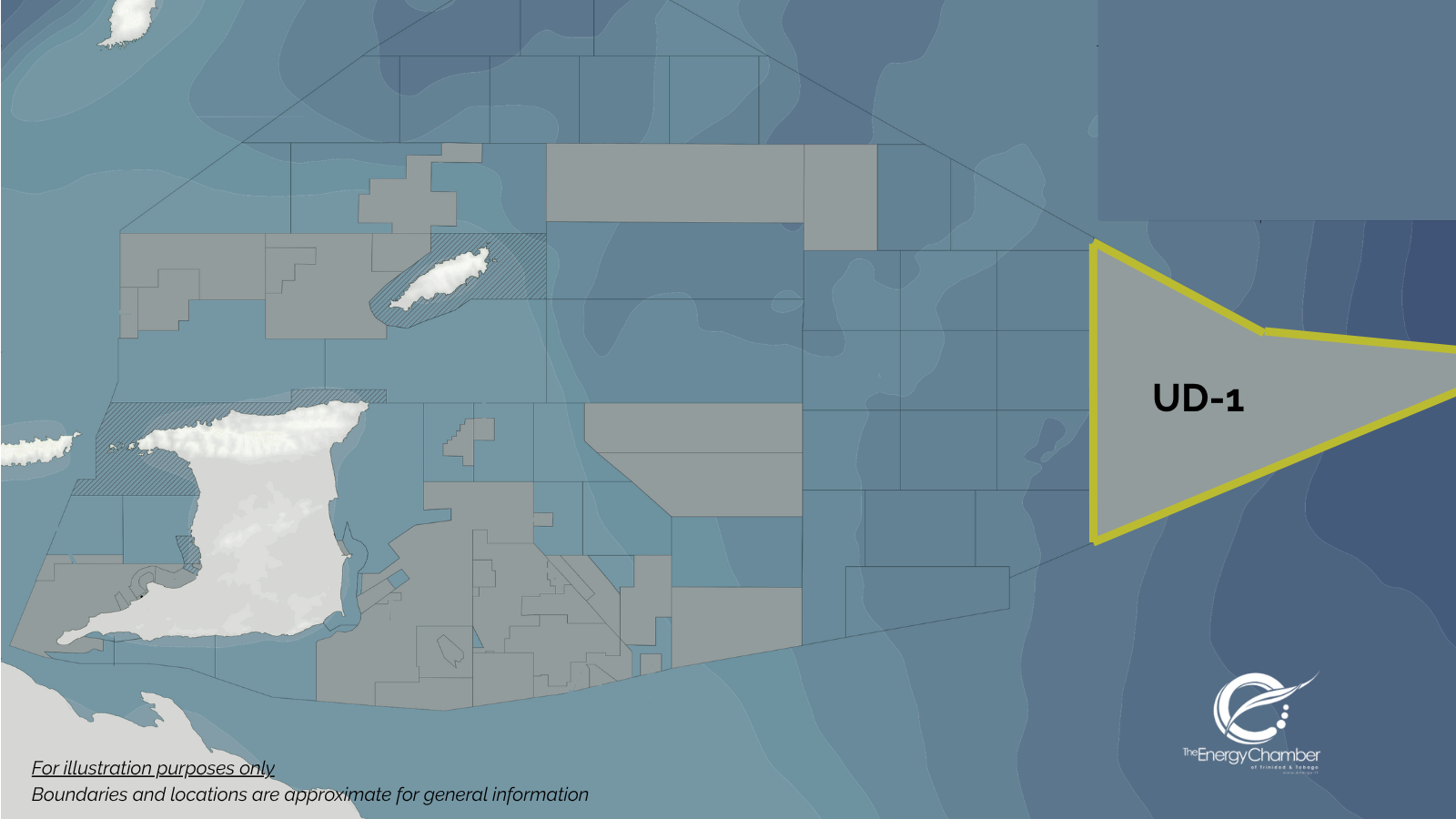
ExxonMobil is nearing the completion of its seismic acquisition program on Block TTUD-1 offshore Trinidad and Tobago, capping off a highly active first contract year that included significant financial and developmental investments in the country.
In a letter to Energy Minister Dr. Roodal Moonilal, Paul Riley, President of ExxonMobil Trinidad and Tobago Deepwater Limited, detailed the company’s operational milestones and outlined US$3.66 million in direct payments made to the Ministry of Energy and Energy Industries (MEEI) over the past year, OilNow reported.
ExxonMobil committed to beginning seismic acquisition within six months of signing the production sharing contract in August 2025, a goal it successfully met by launching the survey approximately five months later. Riley credited the collaborative support of the MEEI and the Environmental Management Authority (EMA) during the permitting process for keeping the project on schedule.
“This marks an important milestone in the exploration of TTUD-1 and reflects the significant efforts of all stakeholders involved,” Riley stated.
With the seismic campaign wrapping up, ExxonMobil will shift its focus to processing and interpreting the acquired data. This subsurface evaluation and prospect maturation phase will be critical in identifying potential drilling targets in the ultra-deepwater acreage.
Block TTUD-1 is a massive 7,165-square-kilometer area off T&T’s east coast, combining seven former blocks in water depths exceeding 2,000 meters. The block has drawn significant geological interest due to its structural similarities to other major deepwater petroleum provinces, including the Guyana-Suriname Basin, Ghana’s Tano Basin, and Nigeria’s ultra-deepwater areas.
ExxonMobil operates the block, Occidental Petroleum holding a 10% participating interest following a recent farm-in agreement. Riley noted that the partnership “enhances the technical and operational capabilities available to evaluate the block’s potential.”
Beyond its operational progress, ExxonMobil utilized local companies extensively during the seismic campaign, contracting domestic support for permitting, logistics, marine operations, fuel supply, and accommodations.
The company also allocated US$935,000 specifically toward training, research and development, and scholarships for T&T nationals. A major component of this initiative involved three targeted capacity-building programs designed for MEEI officials. First, ministry representatives completed a three-week rotational program aboard a seismic vessel, gaining direct, hands-on exposure to seismic data acquisition. Later in March, ten officials traveled to Houston, Texas, to study business development, focusing on how subsurface evaluation, project planning, and commercial factors drive hydrocarbon exploration. Finally, in May, nine officials participated in an immersive field geosciences program in Wyoming that combined classroom instruction with physical observations at rock outcrops.
Riley framed these initiatives as vital preparation for the local workforce, ensuring that T&T nationals are positioned for potential technical and employment opportunities should exploration on TTUD-1 yield a commercial discovery.
As ExxonMobil moves into its second contract year, the company is already in discussions with the MEEI to maximize the national impact of future investments.
“Looking ahead to the next contract year, we are actively engaging with the MEEI to explore opportunities to further increase the impact of future payments,” Riley wrote.
These upcoming initiatives will likely be tailored to support Trinidad and Tobago’s priority development needs, with a specific focus on forging stronger, long-term partnerships between ExxonMobil and national universities.