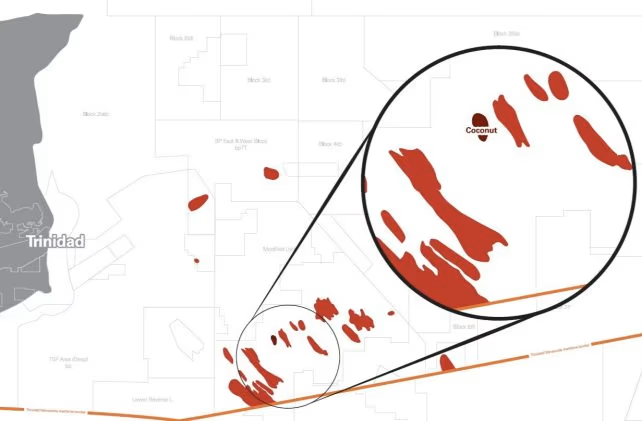
The National Gas Company of Trinidad and Tobago (NGC) has signed a term sheet with EOG Resources and bpTT to acquire 100% of EOG’s natural gas volumes from the offshore Coconut development, Chairman Gerald Ramdeen announced.
The agreement will add 300 billion cubic feet (bcf) of gas to NGC’s supply network, aiming to bolster the Caribbean nation's downstream petrochemical sector. First gas from the project is expected in the third quarter of 2027.
The Energy Chamber welcomes this announcement as a critical step toward securing dedicated natural gas volumes for the downstream petrochemical sector, specifically for methanol and ammonia production. While this initiative will improve gas availability, we strongly encourage future projects to adopt a comparable structure. This approach will guarantee a reliable, predictable, and sufficient supply of natural gas to sustain long-term operations.
Coconut, a 50-50 joint venture between bpTT and EOG Resources Trinidad Ltd, reached a final investment decision in 2024. At the time, 85% of the project's volumes were earmarked for liquefied natural gas (LNG) exports.
Speaking at an event hosted by the U.S. Embassy, Ramdeen noted the new deal represents a 300% increase over the volume originally allocated to NGC when the development was sanctioned.
The acquisition is part of a broader strategic shift initiated by the government and the NGC board in July 2025 to prioritize and rebuild the domestic downstream industry.
"Trinidad and Tobago must once again be at the forefront of every negotiation concerning its gas, its infrastructure, and its industrial future," Ramdeen said, adding that the country's new energy vision is inextricably linked to its relationship with the United States.
The Chairman also said that the NGC has been working on laying the foundation to establish a new Atlantic Energy Partnership with the USA. To do this he said the company is restoring commercial discipline, transitioning NGC's role, moving the state-owned firm from primarily purchasing and transporting gas toward a more strategic role as an investor and producer, investing in the integrity and flexibility of the midstream and supporting new supply to the downstream.