
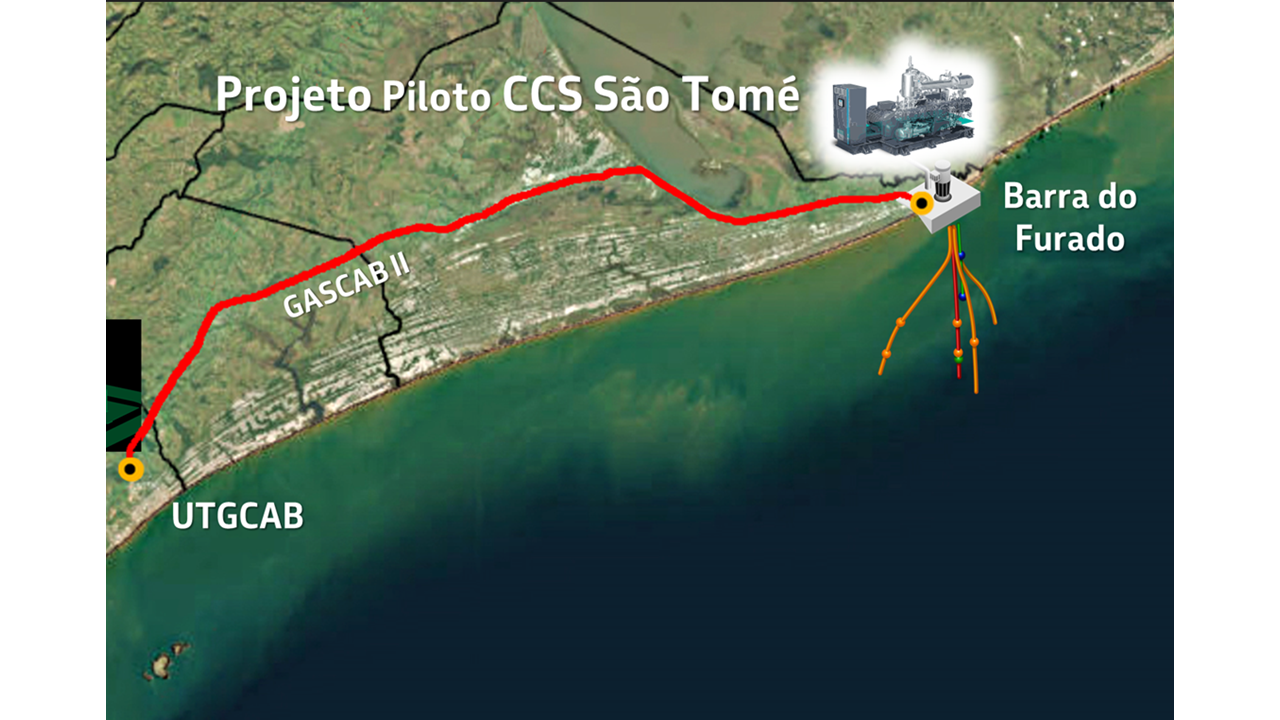
Brazilian state-run oil company Petrobras has signed a contract with Halliburton to drill four onshore wells in Rio de Janeiro state for Latin America's first industrial carbon capture and storage (CCS) pilot project.
The agreement covers the drilling and completion of one vertical injector well and three directional monitoring wells at the Barra do Furado Station in Quissamã, Petrobras said.
The infrastructure is part of the São Tomé CCS Pilot Project, which aims to transport carbon dioxide via pipeline and store it in a saline reservoir. The pilot targets the capture of up to 100,000 metric tons of CO2 annually for a three-year period, advancing the company's broader ambition to achieve carbon neutrality by 2050.
Petrobras expects to complete the drilling and associated infrastructure by 2028. The operational phase is slated to begin in 2029, featuring three years of active gas injection followed by three years of reservoir monitoring.
The research and development initiative will serve as a testbed for regulatory bodies, including Brazil's oil regulator ANP and the state environmental institute INEA. The data gathered is expected to help authorities monitor and validate standards for the future commercial deployment of geological carbon storage in the country.
To monitor the operation, the project will deploy several technological innovations, including fiber optic coatings to track the CO2 plume in real time, specialized CO2-resistant materials, and a reservoir sampling system designed to eliminate the need for well interventions. Additionally, fiberglass coatings on the monitoring wells will allow for data recording using nuclear magnetic resonance technology.