
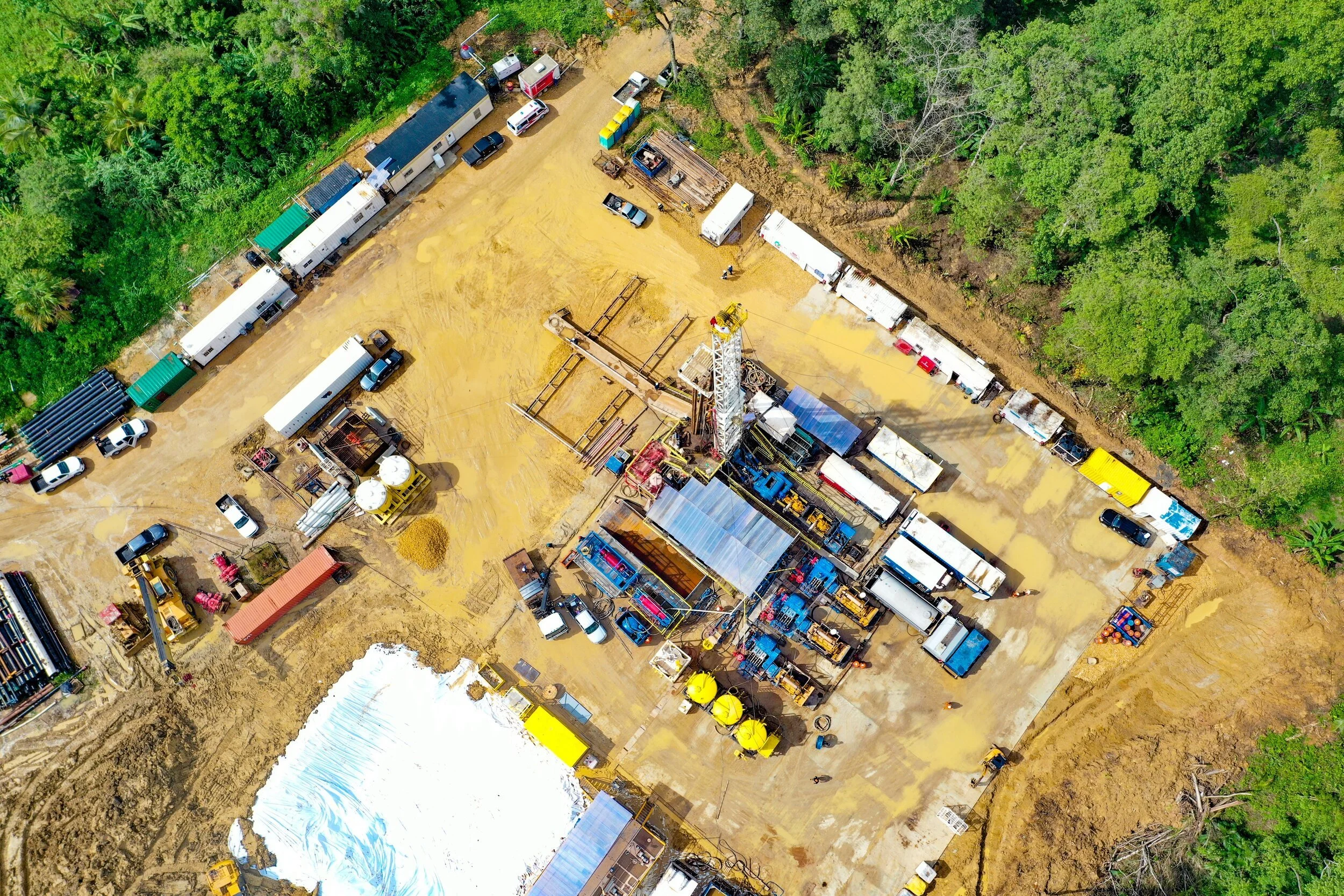
Touchstone Exploration is making a bigger play in Trinidad and Tobago’s onshore energy sector, and the company’s next phase of growth is beginning to look increasingly significant for the wider market. After years of steadily building acreage, infrastructure and production, the Canadian operator is now targeting output of about 20,000 barrels of oil equivalent per day, up from current production of roughly 5,500 boe/d. This goal comes at a time when Trinidad and Tobago continues to look for dependable upstream supply and practical, near-term production growth. In that setting, Touchstone’s onshore push is shaping up as one of the more interesting developments in the country’s energy landscape.
According to the recent report by Upstream, President and CEO, Paul Baay said the company is currently producing about 1,200 barrels per day of liquids and 35 million cubic feet per day of gas in Trinidad, and sees a path to significantly higher output as it develops the Central Block, Cascadura and other acreage positions. Just as importantly, the company now appears to have assembled a strong enough onshore position to drive much of that growth on its own terms.
A big part of that story is the Central Block acquisition from Shell, which materially expanded Touchstone’s footprint and gave it additional producing assets, processing infrastructure and development inventory. Touchstone said the acquisition added about 1,910 boe/d of production, strengthening its operating base and giving it more room to grow through assets that are already connected to infrastructure and closer to market.
The Central Block is already moving into a more active development phase. The first well in the current campaign, Carapal Ridge-3, was tied into the gas facility on 28 March and was flowing at 5.7 MMcf/d, lifting field output to 21.5 MMcf/d. This matters because it shows the company is not just talking about future potential. It is actively converting that potential into flowing volumes. With the current programme expected to continue through mid-2027, Touchstone is steadily building a clearer production runway.
Cascadura remains another important part of the growth picture. The company has said a booster compressor is expected to arrive in Trinidad for installation and commissioning, a step that should support improved production rates and operational stability. That adds another layer to the company’s strategy. The growth story here is not only about drilling new wells, but also about improving performance across existing assets and making fuller use of infrastructure already in place.
That combination of drilling, optimisation and infrastructure-led development is what makes Touchstone’s approach notable. Rather than relying on a single large project, the company is advancing through a series of practical steps that can build production over time. In a country where upstream supply remains a central issue for LNG, petrochemicals, and the wider gas value chain, that kind of steady progress can be meaningful.
The broader backdrop in Trinidad and Tobago gives the story added relevance. The Central Bank said that during October to November 2025, crude oil production rose by 3.1% year on year, while natural gas output declined by 8.6%. That underlines a familiar challenge for the country, but it also highlights why new and reliable onshore volumes can carry real value. Offshore developments will continue to dominate much of the supply conversation, but Touchstone’s progress shows that onshore production can also play a constructive role, especially when supported by existing infrastructure and a clear drilling pipeline.
That is why the company’s longer-term target is attractive. A move toward 20,000 boep/d would represent a substantial step-up from current levels and would reinforce the idea that onshore Trinidad still holds room for meaningful development. Even more importantly, it would position Touchstone as a larger and more consequential supplier in the domestic market at a time when every source of additional supply carries value.
Touchstone’s 2025 results still underline the importance of execution, but they also help explain why the company’s next phase matters. Petroleum and natural gas sales came in at $45.8 million, compared with $57.5 million in 2024, while funds flow from operations also moved lower year on year. Even so, the company now enters this period with a broader asset base, added infrastructure and a more active drilling programme, giving it a stronger platform from which to build. The 20,000 boe/d target is ambitious, but if execution at Cascadura and the Central Block continues to progress, it could mark a meaningful step-up in both production consistency and financial performance.
The direction, at least, is becoming clearer. Touchstone is no longer just a small onshore producer operating at the margins of Trinidad’s energy sector. It is positioning itself as a scaled independent with infrastructure, drilling inventory and room to expand. For Trinidad and Tobago, that does not replace the importance of offshore gas, but it does add another source of potential resilience. And in a market still looking for supply growth, that is a story worth watching.