The oil and gas industry in the United States has come out strongly against the steel and aluminum import tariffs introduced by President Donald Trump. On Thursday 8th March, President Trump signed into effect tariffs of 25 per cent on steel and 10 per cent on aluminum, a measure that was a campaign promise geared towards helping waning U.S. industries.
The Prime Minister of Grenada, Dr. the Right Honourable Keith Mitchell, has confirmed a commercial hydrocarbon find offshore Grenada, the day before national elections are carded.
Recently released figures from the Ministry of Energy and Energy Industries have confirmed that average gas production in 2017 was up slightly from the previous year. While the year-on-year increase in total production was just 1 per cent, it represents the first year-on-year increase in average production since 2013.
With the first floating production storage and offloading (FPSO) for the Liza Phase 1 project under construction in Singapore, Exxon and its partners are not only far advanced in the approval process for a larger second FPSO for Liza Phase 2, but also actively considering a third FPSO for Guyana.
Exploration in the Caribbean continues to pick up. This week it was announced that Repsol has awarded the drilling contractor Seadrill, for an ultra-deepwater drillship to be used offshore Aruba.
In any renegotiations, the Government must be mindful of our well-deserved reputation as a jurisdiction that fully respects commercial contracts. We must ensure that this reputation is preserved or even strengthened in this process.
According to a press release by Range Resources (Range), they are very pleased with the production results from the latest well which, according to the company, is one of the best producing wells drilled by Range in recent years in Trinidad.
The Government of Guyana has made public the production sharing contract between the Government of Guyana and ExxonMobil affiliate, Esso Exploration and Production Guyana Limited. The release of the agreement came on the heels of several sections of the business community in Guyana calling for it.
In early January, Exxon Mobil Corporation announced positive results from its Ranger-1 exploration well, marking ExxonMobil’s sixth oil discovery offshore Guyana since 2015. The Ranger-1 well discovery adds to previous world-class discoveries at Liza, Payara, Snoek, Liza Deep and Turbot, which are estimated to total more than 3.2 billion recoverable oil-equivalent barrels. ExxonMobil affiliate, Esso Exploration and Production Guyana Limited, began drilling the Ranger-1 well on November 5, 2017 and encountered approximately 230 feet (70 metres) of high-quality, oilbearing carbonate reservoir. The well was safely drilled to 21,161 feet (6,450 meters) depth in 8,973 feet (2,735 meters) of water.
Successful plant maintenance turnarounds in the downstream petrochemical and heavy industrial sector are key to the successful longterm operation of facilities. These turnarounds (or TARs as they are commonly called in the industry) are also key business opportunities for the myriad of service companies and contractors who support the industry. TARs are also important for the thousands of contract workers who pick up temporary employment during these periods, often working long hours and accumulating significant overtime income.
Ammonia prices have rebounded. This rebound comes after a low in August when it dipped below 150 US$/tonne. According to the Food and Agriculture Organisation (FAO), the price continued the upward trend at the end of the year due to lower supplies in the Black Sea where portions of ammonia were diverted to produce urea.
Earlier this month, Prime Minister, Dr. the Honourable Keith Rowley, delivered an address to the nation. While the address touched on several economic issues facing the country, there was specific mention of the future of the energy sector and in particular, the role that the state oil company, Petrotrin, plays in the economy. Dr. Rowley stated, ‘Petrotrin has contributed significantly to the growth and development of Trinidad and Tobago but is now in need of fundamental restructuring, which cannot be put off any longer’.
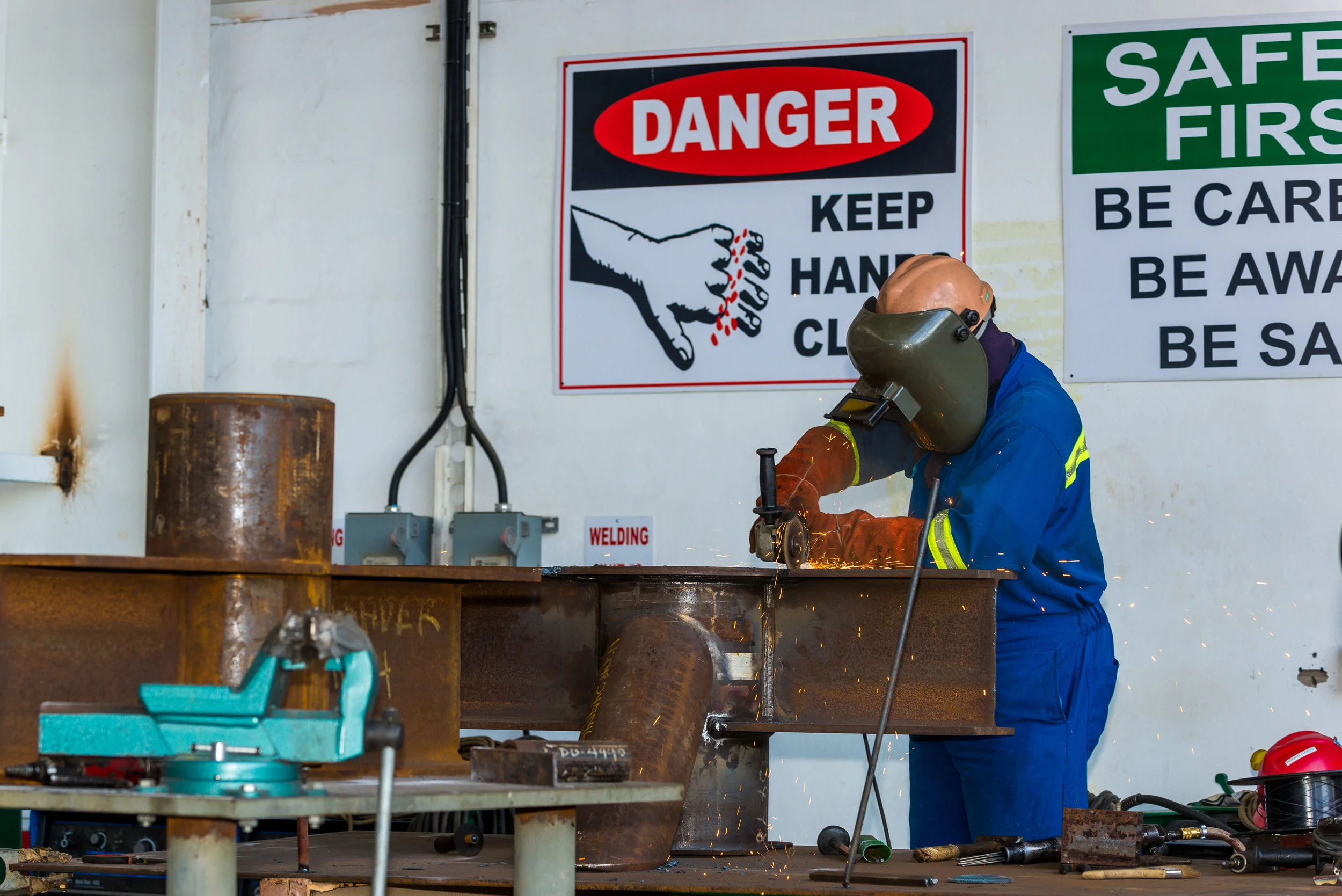
Well-deserved and hearty congratulations are extended to Process Components Limited (Procom) and Massy Technologies Applied Imaging (Trinidad) Ltd. who each got a perfect score of 100 per cent in each Safe TO Work (STOW) element at their 2017 recertification audits. STOW is a certification programme for contractors’ health, safety and environmental (HSE) management systems (MS) which involves contractors implementing the locally developed STOW HSE requirements and undergoing an independent audit to verify compliance to the requirements.
While the country continues to struggle to meet its renewable energy targets by 2021, the Government of Trinidad and Tobago has made a first step in the direction of diversifying its energy mix for electricity away from 100 per cent natural gas-fired power plants. Earlier in September, the Ministry of Energy and Energy Industries issued a request for the submission of expressions of interest (EOI) for a waste-to-energy (WtE) facility at the Beetham Landfill site.
One of the arguments used by proponents of fossil fuel subsidies in Trinidad and Tobago is that the gasoline or diesel that they put into their tanks is produced in the country and, therefore, belongs to them and should be provided to them at a low price. In reality, on average, more than half of the hydrocarbon molecules going into any gasoline or diesel tank will actually have been produced in another country and imported to Trinidad and Tobago to be refined at the Point-a-Pierre refinery. The hydrocarbon molecules going into your tank could be from Trinidad and Tobago, but they also could be from Russia, Gabon, Brazil or Colombia.
Shell’s activity in Trinidad and Tobago is set to accelerate over the next few years, with two rigs due to be simultaneously in operations for the first time in the recent history of the asset (which was brought into the Shell Trinidad & Tobago Limited portfolio through their purchase of BG Group). The recent acquisition by Shell Trinidad & Tobago Limited of Chevron’s interests in Trinidad and Tobago has allowed them to make investment decisions on new activity off Trinidad’s east coast without having to seek the agreement of a partner. This has been important in unlocking the new investment in upstream gas production.
Over 96 per cent of service companies reported that they were affected by late payments and that they had receivables in excess of 60 days, according to a survey of contractors and service companies conducted by the Energy Chamber of Trinidad and Tobago. In addition, 58 per cent of respondents said that the impact on their companies was very significant.
With new gas coming on stream from bpTT’s Juniper project and the full implementation of the Trinidad onshore compression (TROC) project, national gas production in Trinidad & Tobago appears to be at last turning the corner and showing signs of growth.
The Noble Bob Douglas drillship, owned by offshore driller Noble Corp, has been hired to work for Exxon in Guyana. The contract is with ExxonMobil in Guyana and is for a three-year period. The estimated contract start date is Q1/Q2 2018 with the estimated contract end date being Q1/Q2 2021.
Currently, the local energy landscape is challenged as there exists a natural gas supply shortfall in the local energy sector, primarily as a result of depleting reservoirs (mature province); easy discoveries already found; little exploration contributing to the gas supply challenge; limited access to good quality and low cost seismic data and long negotiation period for gas contracts.