
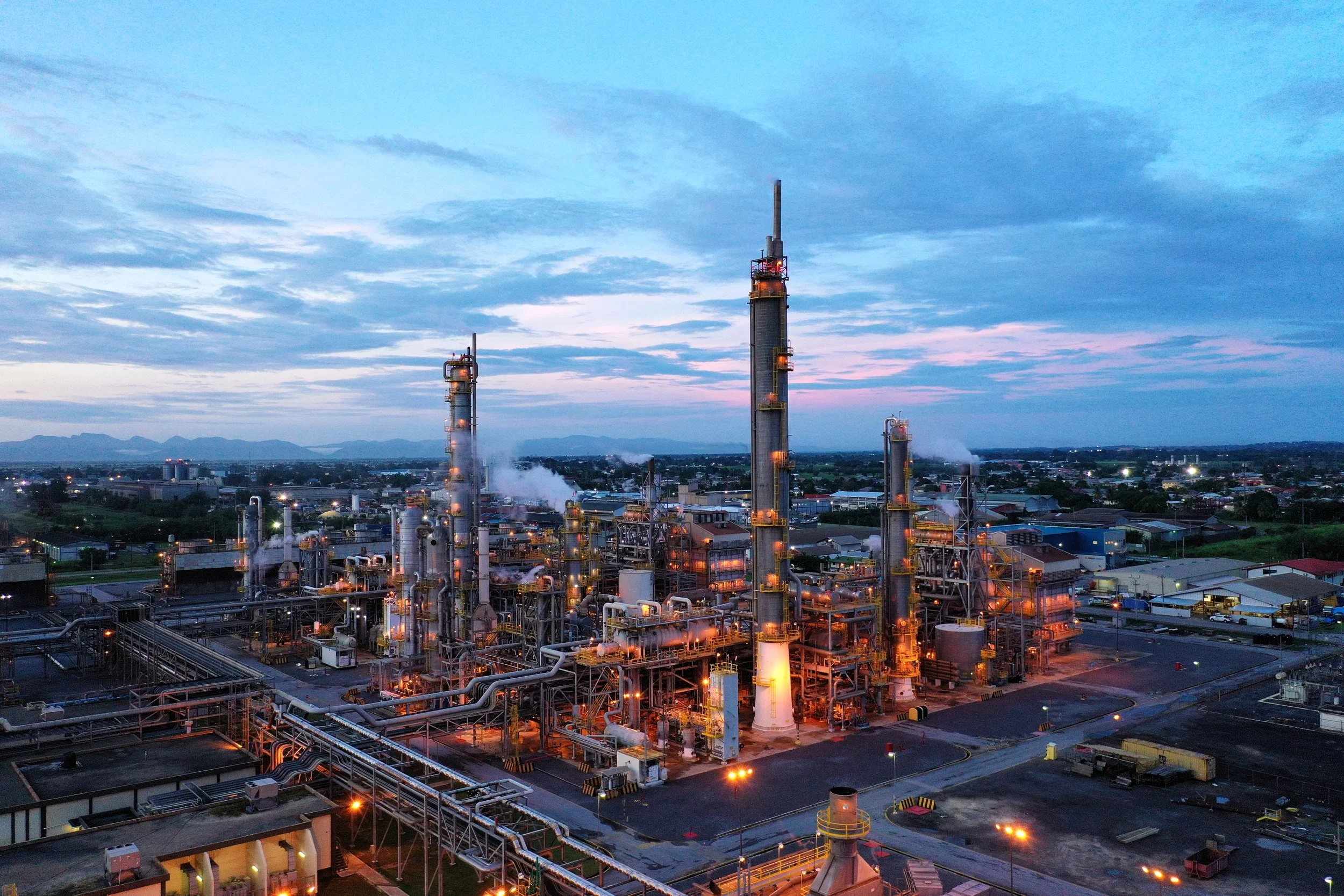
The Government’s 2026 Mid-Year Budget Review, presented by the Minister of Finance, the Hon. Davendranath Tancoo, highlights both the benefits and challenges arising from the current global energy market. While higher oil prices have provided a welcome boost to government revenues, the review underscores Trinidad and Tobago’s continued exposure to costly fuel imports, substantial subsidy expenditures, and the urgent need to increase domestic energy production.
This dual nature of surging energy prices is a central theme of the review. On the one hand, strong international markets have fortified government revenues and contributed to notable growth in the Heritage and Stabilisation Fund (HSF), which increased by approximately US$620 million, from US$5.98 billion in April 2025 to US$6.60 billion in June 2026. This growth provides a crucial buffer against future economic shocks.
On the other hand, higher commodity prices inflate the cost of imported refined fuels, a vulnerability exacerbated by the closure of the Petrotrin refinery. Consequently, between October 2025 and May 2026, the government spent approximately TT$395 million to maintain stable domestic fuel prices. While these subsidies represent a significant fiscal burden, they are necessary to shield consumers from the rising cost of fuels and to moderate transportation and distribution costs across the wider economy. As noted in a May 2026 article by the Energy Chamber, this subsidy framework allowed Trinidad and Tobago to avoid the gasoline price hikes seen across the rest of CARICOM, keeping local fuel costs well below both regional and global averages.
Despite the near-term fiscal support provided by favorable international pricing, the longer-term solution to sustainable revenue growth remains increased domestic output. Domestic oil and gas production continues to decline, preventing the country from fully capitalizing on the current price surges. A stronger production base is essential; it would maximize financial windfalls during market peaks and provide a vital revenue cushion during market downturns.
Reversing these production declines requires bringing new resources into development. In this regard, the Energy Chamber of Trinidad and Tobago has welcomed the recently released Finance Bill 2026, which introduces pivotal measures to incentivize the upstream gas sector. The Bill proposes lowering the royalty rate from 12.5% to 8% for natural gas extracted from certified marginal marine fields. By easing the tax burden on these mature and marginal fields, the new legislation directly improves project economics and increases the likelihood that operators will reach final investment decisions.
Encouragingly, several new natural gas fields, including Manatee, Aphrodite, Onyx, Coconut, and Ginger, are expected to come online in the near future. Additionally, liquefied natural gas (LNG) production increased from 16,634,427 cubic meters in 2024 to 17,594,130 cubic meters in 2025. This marks the first year-on-year increase since 2022, occurring against a backdrop of favorable LNG pricing over the past year.
To further support these developments, the Ministry of Energy and Energy Industries recently established the Energy Accelerator Hub. This initiative directly addresses the Energy Chamber’s previous calls to accelerate the pace at which upstream projects move from the bid round to first gas. One project currently being fast-tracked through the Hub is the ExxonMobil/Occidental deepwater Production Sharing Contract (PSC), and the Energy Chamber eagerly anticipates the results.
Improving the national investment climate remains critical. Increased upstream investment directly drives demand for the energy services sector, which encompasses support for downstream plants, midstream facilities, maintenance, logistics, and engineering. Because of this interconnectedness, employment across the country relies heavily on robust oil and gas production and a steady supply of natural gas for industrial use.
Without securing new sources of natural gas, the downstream petrochemical will continue to also contract. The production of ammonia and methanol are critical for the overall economy since almost all is exported to foreign markets, earning critical foreign exchange. The fall in exports from across the sector, has led to less foreign exchange being generated and becoming available in the economy. The downstream petrochemical sector is also a large employer within the country, not only in direct labour but also indirect through contractors and transient labour which serves the sector during turnarounds.
Anyone who works for on a downstream plant in Trinidad and Tobago must complete an assessment of their basic HSE knowledge once every two years. Over time, there has been an annual decline in the number of people needing to complete the HSE training, which is an indicator of the decline in resources needed. This trend essentially tracks with the decline in output from 2015, when 14,784 people completed the exam, compared to only 9,271 in 2025 - a decline of 37%. This decline shows the shrinking pool of workers who can potentially work in the downstream sector.
Looking ahead, the Energy Chamber also encourages growth in renewable energy and low-carbon solutions. Trinidad and Tobago’s highly skilled energy services sector is well-equipped to support this transition, delivering expertise for local wind and solar initiatives, regional geothermal projects, and industrial hydrogen generation. Utilizing the country’s existing expertise to drive activity in these emerging areas will spur further economic development.
These projects also require opportunities for financing. One option would be to create mechanisms where companies can pay into but also receive funding. An existing mechanism is the Green Fund which holds over $12 billion dollars. This fund however cannot be easily accessed and does not fund climate related activities. The Energy Chamber has also advocated for this for a number of years since the fund continues to grow but only disburses based on a narrow use case. This is particularly important for energy sector firms which are currently operating on narrow margins, but have the opportunity to have large decarbonization projects which can avoid large quantities of greenhouse gas emissions if executed. These projects also have the ability to generate employment as well.
Counterintuitively, the decommissioning of aging onshore and offshore assets also presents a substantial opportunity for energy service companies. Safely taking these projects offline requires significant labor, specialized contractors, and capital. While life-extension strategies are sometimes viable for assets operating well beyond their designed lifespans, systematic decommissioning is essential to mitigate the risks of environmental contamination and catastrophic failure.
Overall, the 2026 Mid-Year Budget Review makes it clear that while strong energy prices have delivered short-term fiscal relief, Trinidad and Tobago’s economic resilience relies on a multipronged approach: increasing domestic production, reducing dependence on imported fuels, and maintaining the prudent management of energy revenues through mechanisms like the HSF.