
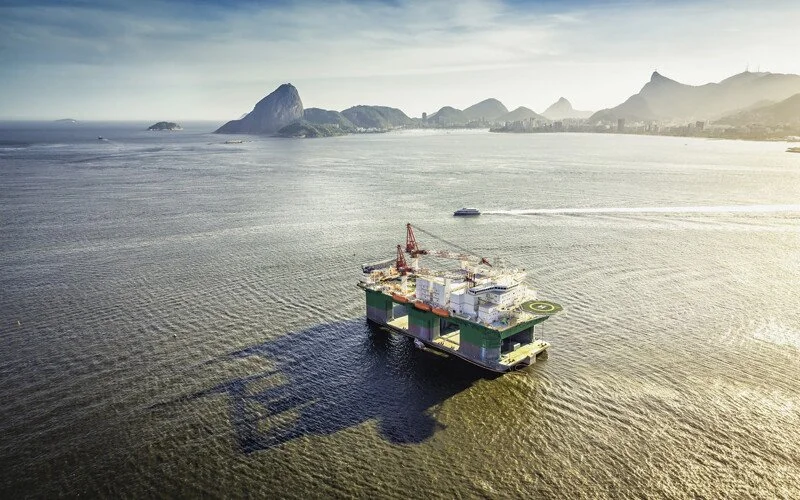
Brazil’s oil and gas regulator has approved the development plan for Shell’s Orca and Sul de Orca project in the pre-salt Santos Basin, clearing another regulatory milestone for the development ahead of planned production in 2029.
The National Agency of Petroleum, Natural Gas and Biofuels (ANP) approved the plan at a board meeting on August 7. The development was previously known as Gato do Mato, with the Orca and Sul de Orca development areas formally established following declarations of commerciality in 2025.
The project will use a floating production, storage and offloading vessel designed to produce up to 120,000 barrels of oil per day. Shell estimates recoverable resources at around 370 million barrels. First production remains targeted for 2029.
Construction of the FPSO Gato do Mato, being developed with MODEC, is now more than 50% complete and ahead of the planned schedule for this stage of the project, according to Shell.
Natural gas produced from the development will initially be reinjected into the reservoir. The consortium’s development plan did not set a firm date for exporting the gas, an issue which had delayed the ANP’s decision in June.
In approving the project, the regulator required the development plan to be revised by December 31, 2032, with provisions for the future evacuation of natural gas from the field. ANP’s technical assessment indicated that gas exports could begin between 2035 and 2040, with capacity through Brazil’s Route 2 gas pipeline expected to become available from around 2038.
Shell remains operator of Orca. The company agreed in February to sell a 20% interest in the project to Kuwait Foreign Petroleum Exploration Company (KUFPEC). Once that transaction is completed, Shell is expected to retain 50%, Ecopetrol will hold 30% and KUFPEC 20%. The KUFPEC transaction remains subject to the applicable Brazilian regulatory approvals.
The Orca development covers the BM-S-54 concession and the Sul de Orca production-sharing contract in water depths of approximately 1,750 to 2,050 metres offshore Brazil.
With the development plan now approved and FPSO construction past the halfway point, work continues toward the project’s planned 2029 start-up.