
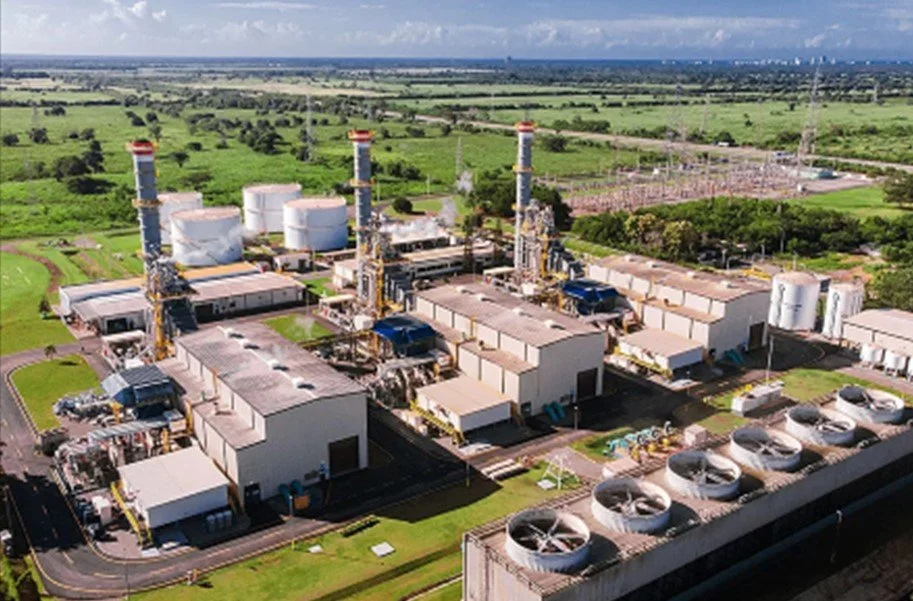
The Dominican Republic has cleared the next stage of operational testing at the Manzanillo Power Land gas-fired power plant, bringing the 437.71 MW combined-cycle facility closer to full operation.
The country’s Superintendence of Electricity granted Energía 2000 a provisional permit to connect the steam-cycle portion of the plant to the national grid for testing. The permit covers the addition of a 152.11 MW steam turbine to the 285.6 MW gas turbine already included in the project.
Together, the two units give Manzanillo Power Land a total capacity of 437.71 MW.
The plant uses combined-cycle technology, which captures heat produced by the gas turbine and uses it to generate steam for a second turbine. This allows the facility to produce more electricity from the same fuel supply than a simple-cycle gas plant.
The latest approval does not represent final authorisation for commercial operation. It allows the project company to carry out operational tests while connected to the Dominican Republic’s National Interconnected Electric System.
The provisional permit is valid for 90 working days. Energía 2000 must comply with grid operating requirements, its environmental licence and the conditions set by the electricity regulator during the testing period.
Manzanillo Power Land is located at El Copey in the municipality of Pepillo Salcedo, Monte Cristi province. Electricity from the plant will be transferred through the 345 kV Manzanillo-El Naranjo transmission line, which runs for about 129.5 kilometres.
The facility forms part of the Dominican Republic’s expansion of natural gas-fired generation. New combined-cycle capacity is expected to provide firm electricity supply as power demand grows and the country adds more renewable generation to its grid.
Natural gas has taken on a larger role in the Dominican electricity sector as the country seeks to reduce its exposure to diesel and fuel oil. The Manzanillo project will add another major source of gas-fired capacity once testing is completed and the facility receives the remaining approvals required for full operation.
The project also adds to LNG demand in the Caribbean. Unlike Trinidad and Tobago, the Dominican Republic does not produce natural gas and depends on imported LNG to supply its gas-fired power plants.
The start of steam-turbine testing marks an important step in completing the combined-cycle configuration. Once fully commissioned, the plant will rank among the larger electricity-generation facilities in the Dominican Republic.