
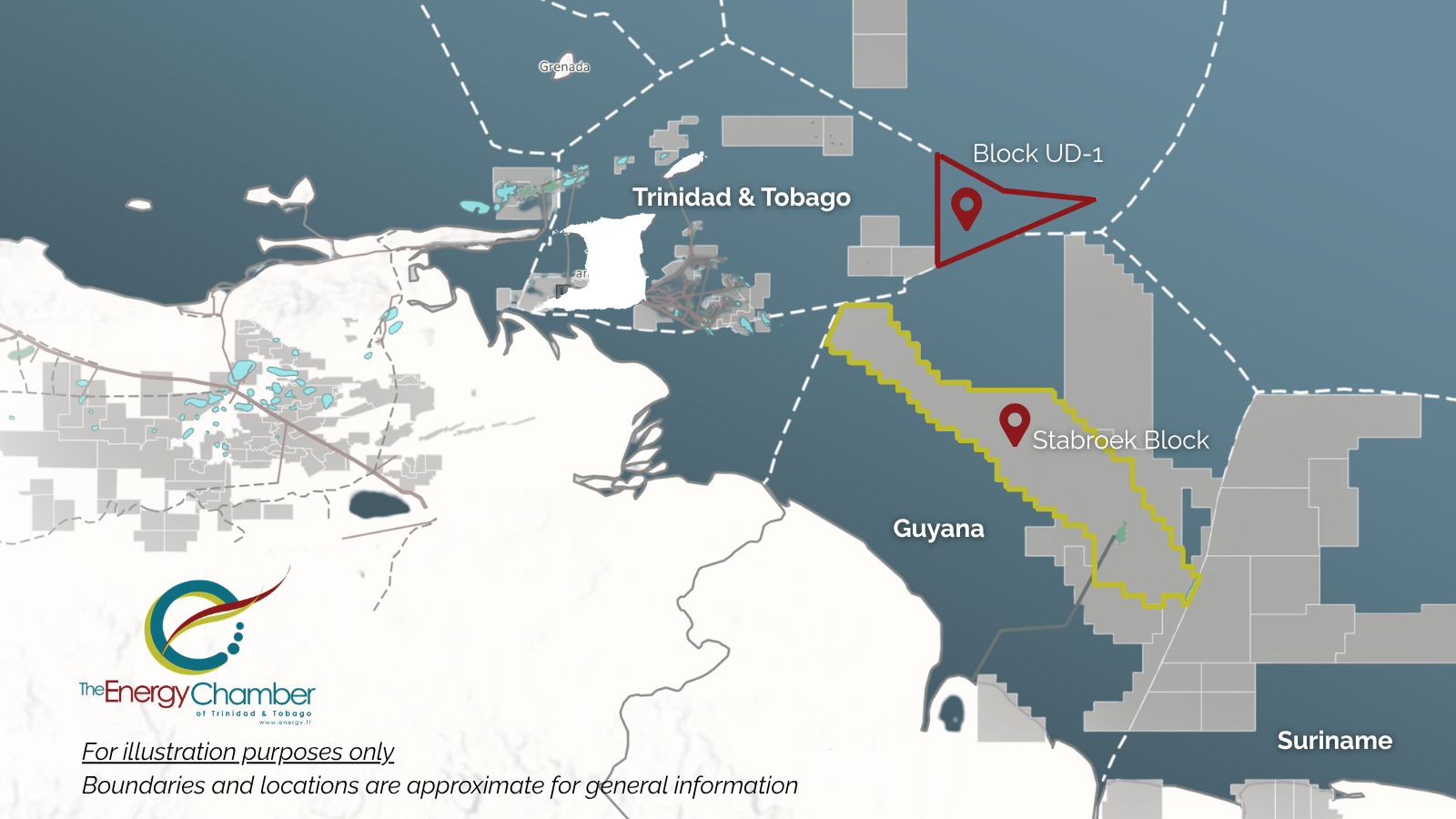
ExxonMobil says Trinidad and Tobago’s offshore geology has similarities with deepwater reservoirs in Guyana and Angola, adding to signs of renewed exploration interest in the country’s deepwater acreage.
According to OilNOW, ExxonMobil Vice President of Exploration John Ardill said the company is looking for similar deepwater oil reservoirs offshore Trinidad and Tobago. He made the comments during the Offshore Technology Conference in Houston, where he noted that early interpretation from Exxon’s work offshore Trinidad and Tobago points to comparable deepwater systems.

The comments come as ExxonMobil continues to expand its regional exploration portfolio. Reuters reported earlier this year that Exxon awarded Shearwater Geoservices a contract to acquire 3D seismic data offshore Trinidad and Tobago. The survey covers about 6,000 square kilometres and was expected to begin in the first quarter of 2026, lasting around five months in water depths of 2,000 to 3,000 metres.
For Trinidad and Tobago, the work marks an important step in testing the country’s deepwater potential. While the country has a long history as a gas producer, new exploration success would help strengthen long-term production prospects and support the wider energy value chain, including LNG, petrochemicals and energy services.
Exxon’s interest also reflects the wider shift in the region, where Guyana’s offshore success has changed the investment outlook for the southern Caribbean. Guyana is now producing more than 900,000 barrels per day from the Stabroek Block, while Exxon continues to use advanced technology and artificial intelligence to speed up subsurface interpretation. Reuters reported that Exxon is using AI and high-performance computing to reduce seismic interpretation times from months to days in Guyana, with the company also applying these tools to other frontier opportunities.
Although it is too early to determine whether Trinidad and Tobago’s deepwater acreage will produce results similar to Guyana, the renewed exploration activity is a positive signal. It shows that major international operators still see geological potential in the country and are willing to invest in the data needed to unlock new opportunities.
The next major milestone will be the completion and interpretation of the seismic survey. If the data supports further drilling, Trinidad and Tobago’s deepwater could become an important part of the country’s future energy outlook.
For a country seeking to stabilise production and rebuild upstream momentum, ExxonMobil’s latest comments provide a constructive signal. Trinidad and Tobago’s mature energy sector already has established infrastructure, technical expertise and regional experience. New deepwater exploration could build on those strengths and help position the country for another phase of energy development.