
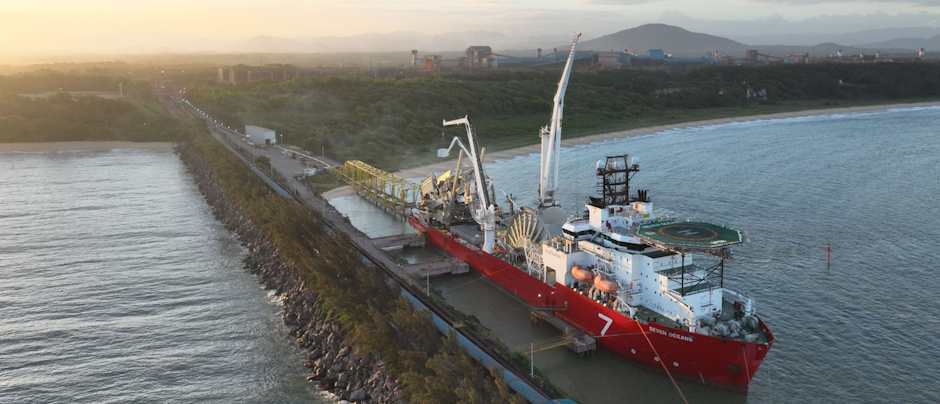
Subsea7’s award of a “supermajor” offshore contract for the Sépia 2 development in Brazil is another indication of the scale and continuity of investment still moving through the country’s pre-salt sector. The contract, awarded by Petrobras following a competitive tender, covers engineering, procurement, fabrication, installation and pre-commissioning of subsea umbilicals, risers and flowlines for 17 wells, including two wells from the Sépia 1 project, as well as one gas export line with 18 risers. Subsea7 said project management and engineering will begin immediately from its offices in Rio de Janeiro, Paris and Sutton, with offshore operations scheduled from 2029. According to Subsea7, a “supermajor” contract is worth over $1.25 b
The project is tied to one of the larger pre-salt expansion phases now advancing in Brazil. Sépia 2 is located about 280 kilometres southeast of Rio de Janeiro in water depths of around 2,170 metres in the Santos Basin pre-salt. Industry reporting describes it as one of Brazil’s larger sanctioned pre-salt expansion projects, while Petrobras’ 2026–2030 business plan identifies Sépia 2 as a core implementation project with start-up targeted for 2030.
Petrobras signed contracts in May 2024 for the P-85 FPSO that will serve Sépia, with planned capacity of 225,000 barrels of oil per day and 10 million cubic metres of gas per day. In August 2024, Petrobras also signed its first subsea equipment contract to begin implementing the Atapu 2 and Sépia 2 projects. Taken together, those milestones show that Sépia 2 is part of a structured build-out involving floating production capacity, subsea systems and long-lead offshore infrastructure.
From a market perspective, the announcement reinforces Brazil’s position as one of the offshore jurisdictions advancing multiple large deepwater developments at the same time. Petrobras’ current business plan allocates most of its total investment to upstream projects, with sanctioned developments including Sépia 2 among the company’s main implementation priorities.
Offshore operations under the contract are scheduled to begin from 2029, and the project remains part of a longer development cycle. However, it is a material step in bringing one of Brazil’s next major pre-salt projects closer to delivery. In that sense, this announcement highlights the continued execution of Brazil’s offshore growth pipeline.