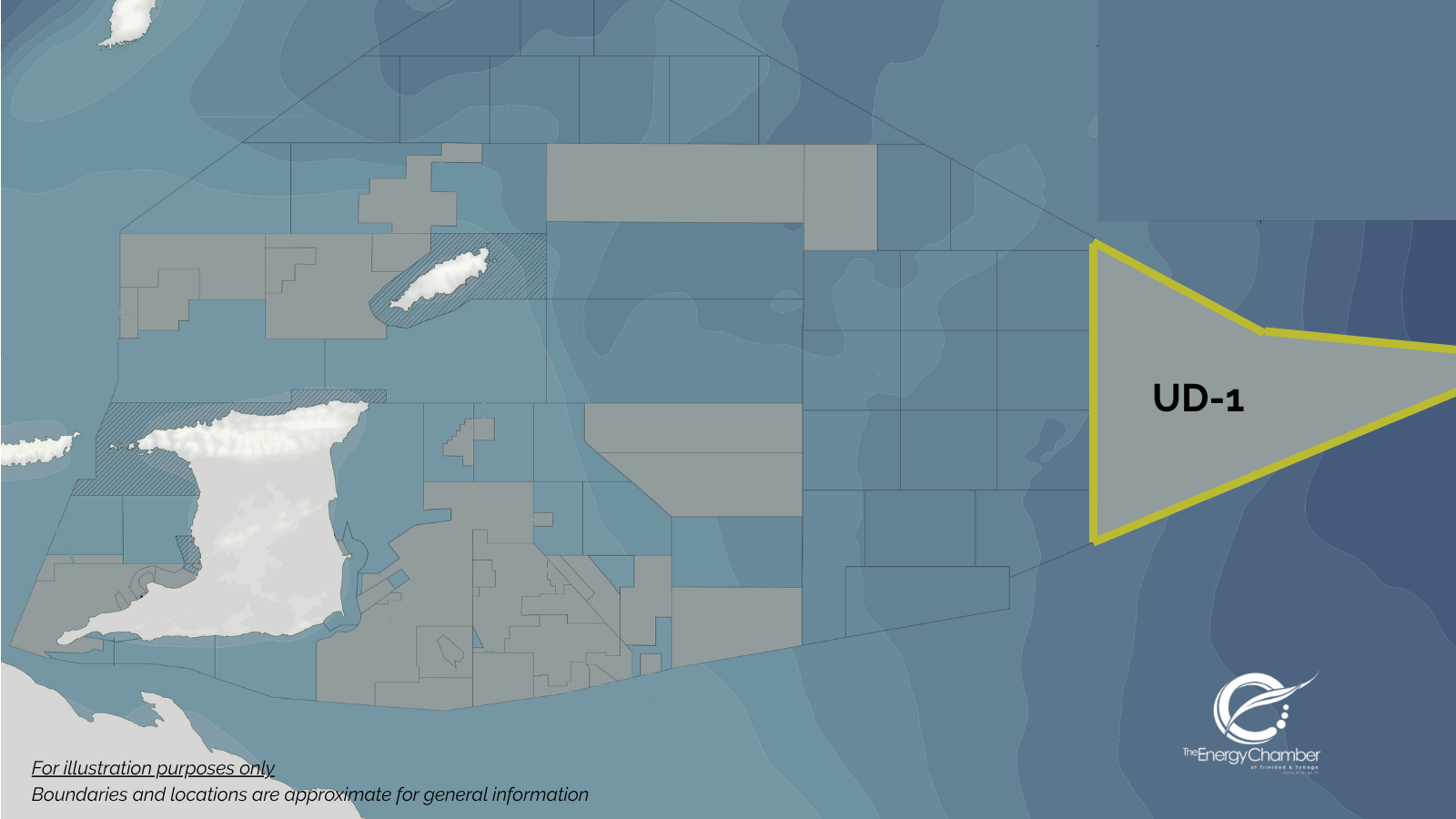
ExxonMobil could drill an exploration well in Trinidad and Tobago’s ultra-deepwater TTUD-1 block in late 2027 or early 2028, with seismic data acquired and processed images expected by the end of 2026.
John Ardill, the company’s vice president and head of global exploration, outlined the timetable at the ROG.e conference in Rio de Janeiro on 21 September. OilNOW, citing Upstream’s reporting of his remarks, said the company was advancing work on TTUD-1 faster than it had during the early stages of its Guyana campaign.
“The data’s in. We’ll see an image by the end of the year, and we would expect to be drilling in late ’27, early ’28,” Ardill said, as reported by OilNOW.
Ardill said the TTUD-1 production-sharing agreement followed seven months of negotiations. He pointed to the pace of contract negotiations and seismic work in comparing the programme with Guyana.
Brazilian energy publication eixos also reported the drilling window and year-end imaging target. It said Ardill described how ExxonMobil had shortened timelines in Guyana by exploring, appraising reservoirs and building production capacity in parallel.
In a separate LinkedIn post, Ardill said international oil and gas exploration was becoming increasingly urgent as companies sought resources for future projects. He cited ExxonMobil’s deepwater developments in Guyana as an example of how earlier discoveries can become producing assets.
ExxonMobil was expanding its global exploration efforts and seeking to shorten the time between seismic acquisition and exploratory drilling, he said. New technologies, advanced computing and artificial intelligence were also helping the company pursue development at greater speed and scale.
Ardill cited a forecast of around 15% growth in global energy needs through 2050, driven by population growth and economic expansion, with hydrocarbons continuing to supply more than half of the world’s energy. He linked that outlook to the need to discover new resources.
The TTUD-1 production-sharing contract was signed on 12 August 2025. Five months later, Shearwater GeoServices announced that ExxonMobil had contracted it to carry out a 3D seismic survey using Amazon Warrior. The planned survey covered approximately 6,000 square kilometres of full-fold area.
In its 25 January 2026 update, the Ministry of Energy and Energy Industries said the vessel was scheduled to leave Chaguaramas that day. The ministry credited government coordination and regulatory support with helping the programme advance.
Despite the faster pace, Ardill cautioned that exploration success would depend on the geology. “The geology has to work for us, same way as it does in any basin,” he said, as reported by OilNOW.